Most Danville homeowners never think about their air ducts until something feels off, a layer of dust that keeps coming back, a musty smell when the heat kicks on, or a spring allergy season that hits harder indoors than out. By then, the gunk has been quietly circulating through every room for years. At Heating and Air Experts, we’ve crawled through enough Contra Costa County attics and closets to know that “affordable” and “thorough” are not opposites, despite what the bargain flyers in your mailbox want you to believe.
This guide breaks down what affordable duct cleaning services in Danville, CA really means, what it should cost, when it’s worth doing, and how to tell an honest crew from a “blow-and-go” outfit. No fluff. Just the stuff a neighbour with HVAC experience would tell you over the fence.
Why Danville Homes Need Duct Cleaning More Than You’d Think
Danville sits in a pocket of the East Bay where the air looks clean and usually is, until it isn’t. Our valleys trap pollen in spring, and late-summer wildfire smoke can roll in from hundreds of miles away. Both of those particles don’t just float past your house. They get pulled into your HVAC system and settle deep inside your ductwork.
Here’s the part people miss. The EPA reports that indoor air can be two to five times more polluted than outdoor air. Your ducts act like the lungs of the home, and when they’re coated in dust, dander, and pollen, every cycle of your furnace or AC redistributes that load through the vents.
The Local Climate Factor
Danville’s seasons work against your ductwork in a way that drier or milder regions don’t deal with. Spring brings heavy tree and grass pollen across the San Ramon Valley. Summer means your AC runs hard for months, pulling air, and everything in it, through the system repeatedly.
Then there’s smoke. When fires burn in Northern California, fine particulate matter (PM2.5) drifts into the Bay Area and lingers. Air-quality monitors in the Danville area routinely log PM2.5 levels well above the World Health Organization’s annual guideline. That superfine soot doesn’t vanish when the sky clears. A good portion of it ends up trapped in your filters and ducts.
What “Dirty Ducts” Actually Do to You
A clogged duct system isn’t just a comfort issue. The U.S. Department of Energy estimates homeowners can save 10 to 20 percent on energy bills by keeping their HVAC systems and ducts clean, because a blocked system works harder to push the same air. NADCA also notes that a striking share of HVAC failures trace back to dust and dirt buildup.
For families with asthma or allergies, the effect is personal. The American Lung Association points out that roughly one in five Americans deals with allergies, and recirculated indoor allergens make symptoms worse. If your kid’s cough flares up the moment the heater starts, your ducts are a reasonable place to look.
What Affordable Duct Cleaning in Danville, CA Should Cost
Let’s talk numbers, because this is where Affordable Duct Cleaning Services in Danville, CA get burned. Nationally, a legitimate residential duct cleaning runs between $450 and $1,000 for an average-sized home, according to NADCA. In higher-cost markets like the Bay Area, expect to land toward the upper half of that range for a thorough, whole-system job.
Some companies price per vent instead of per system. Industry figures put that at roughly $25 to $50 per vent, so a Danville home with ten or twelve registers can quickly reach the $300 to $600 mark just on vents, before the air handler and returns are touched.
Affordable doesn’t mean cheap. It means fair pricing for the full scope of work, with nothing hidden. That distinction is the whole ballgame.
The Real Cost Factors
Your final price depends on a handful of honest variables, and a good company will walk you through each one before they quote you. Home size matters most, since a 3,200-square-foot Blackhawk home has far more ductwork than a 1,400-square-foot Old Town bungalow. The number of supply and return vents drives labor time. So does how easy your ducts are to reach, and how badly contaminated they are.
If a technician finds mold during inspection, that’s a separate conversation. Genuine mold remediation in an HVAC system is expensive and specialized, sometimes running into the thousands, which is exactly why scammers love to “discover” mold that isn’t there.
Why You Should Run From the $79 Special
This is the most important paragraph in the article, so read it twice. NADCA openly warns homeowners to be skeptical of extremely low whole-house specials, because they’re often bait-and-switch schemes. The crew shows up, quotes $79, then “finds” problems and pressures you into hundreds of dollars in add-ons.
The other version is the “blow-and-go.” These outfits use inadequate gear like shop vacuums and rush through the job in under an hour, often just blowing debris around rather than removing it. You pay for cleaning and end up with worse air than you started with. When the price looks too good to be true in Danville, it almost always is.
How a Proper Duct Cleaning Actually Works
A real cleaning is methodical, not a quick vacuum at the vent covers. Knowing the steps helps you spot whether the crew at your door is doing the job right or faking it.
Step 1: Inspection First
Before any equipment comes out, a qualified technician inspects your system, often with a camera, to document the actual condition of the ducts, coils, and air handler. This is where honest pricing comes from. No inspection, no trustworthy quote.
Step 2: Sealing and Negative Pressure
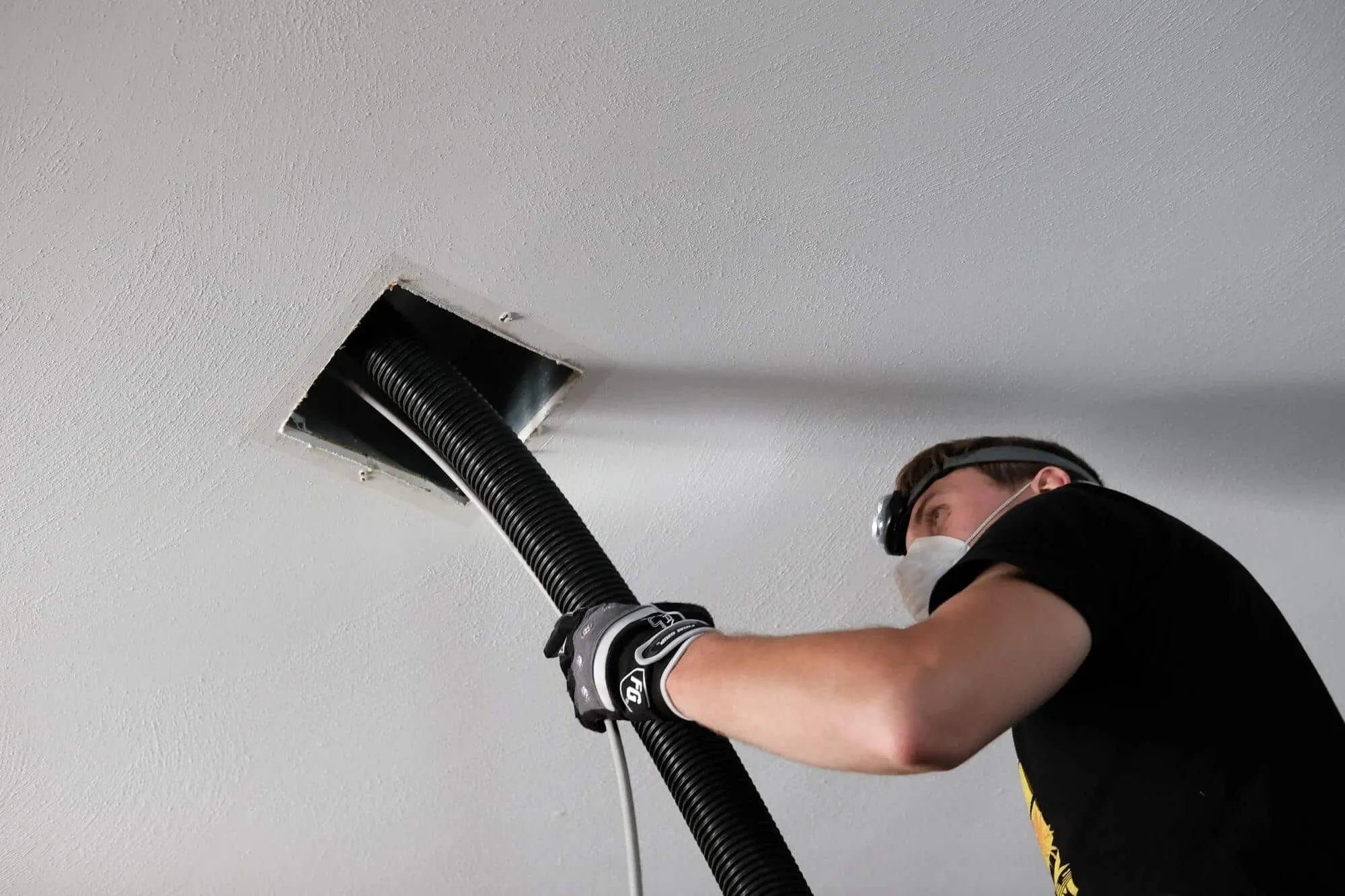
The crew connects a powerful, truck-mounted or high-capacity vacuum to your system and creates negative pressure, so loosened debris gets pulled out rather than scattered into your living space. Vents get sealed off one at a time to direct the airflow.
Step 3: Agitation and Extraction
Using brushes, air whips, and compressed-air tools, the technician dislodges built-up dust and pollen from the duct walls while the vacuum captures it. A genuine NADCA-style cleaning addresses the whole system, supply lines, returns, registers, the air handler, and the blower, not just the parts you can see.
Step 4: Final Walkthrough
A reputable company shows you the before-and-after, explains what they found, and gives you a straight answer on when you’ll need service again. At Heating and Air Experts, we’d rather lose an upsell than lose your trust.
The Equipment Tells You Everything
You don’t need to be an HVAC pro to judge a crew. Look at the truck. Real duct cleaning uses HEPA-filtered extraction and professional agitation tools. If someone rolls up with a household shop vac and a brush from the hardware store, you’re looking at a blow-and-go. Polite, but firm, send them on their way.
How Often Should Danville Homeowners Clean Their Ducts?
This is where we’ll save you money, because more often is not always better. NADCA recommends cleaning your air ducts every three to five years for a typical home. In climates where heating and cooling run for many months, like ours, the shorter end of that window makes sense.
That said, the calendar isn’t the only trigger. Certain situations call for a cleaning regardless of when you last did it.
Signs It’s Time, Sooner Rather Than Later
You should consider service if you spot visible dust puffing from the vents when the system starts, if you notice a persistent musty odor, or if allergy and asthma symptoms spike indoors. Recent remodeling is a big one. Construction dust and drywall particles get everywhere, and they end up in your returns.
Pets shed dander and hair straight into the system, so multi-pet households tend toward the three-year side. And if you’ve ever found evidence of rodents or insects in the ductwork, that’s an immediate cleaning, no debate.
When You Probably Don’t Need It
Here’s the honest part most companies won’t tell you. If your ducts are already reasonably clean, you change your filters on schedule, and nobody in the house has unexplained respiratory symptoms, you can often wait. A company that pushes annual cleaning on a clean system is selling, not serving.
Choosing an Affordable, Trustworthy Duct Cleaning Company in Danville
Affordable only counts if the work is real. Use these checkpoints before you hand over a dollar.
First, confirm certification. NADCA sets the recognized national standard for duct cleaning, and a NADCA-certified provider has agreed to a code of conduct and proper procedures. Ask for proof. Second, demand a written, itemized estimate that spells out exactly what’s included, the full system, not “some vents.” Third, verify insurance, which protects you if something gets damaged. Fourth, read recent reviews and watch specifically for patterns of upselling complaints.
A Quick Comparison: Honest Pro vs. Bargain Trap
The Honest Pro
Inspects before quoting. Provides clear, upfront, itemized pricing. Cleans the entire HVAC system with professional air duct cleaning services HEPA equipment. Explains findings and gives a realistic re-service timeline. Lands in the fair-market range and stands behind the work.
The Bargain Trap
Advertises a shockingly low flat rate. Skips real inspection. Shows up with a shop vac. “Discovers” mold or damage requiring expensive add-ons. Finishes suspiciously fast and leaves your air no cleaner than before.
When you put those two side by side, “affordable” stops meaning “cheapest quote” and starts meaning “best value for honest work.” That’s the mindset that protects both your wallet and your family’s air.
Getting the Most Value From Your Investment
A duct cleaning isn’t a one-and-done miracle. To keep that clean-air benefit going, pair it with simple maintenance. Change your HVAC filter regularly, and during pollen season or a smoke event, upgrade to a MERV 13 or higher filter, which the Bay Area Air Quality Management District specifically recommends for capturing fine smoke particles.
Think of duct cleaning as a reset button and good filtration as the daily habit that keeps the system clean between services. Do both, and you stretch your dollars while breathing easier, the definition of affordable done right.
Conclusion
Affordable duct cleaning in Danville, CA isn’t about chasing the lowest number on a flyer. It’s about paying a fair price, somewhere in the legitimate $450 to $1,000-plus range, for a thorough, whole-system cleaning from a certified, insured crew that inspects first and explains everything.
Skip the $79 specials. Watch the equipment. Ask for NADCA certification and a written estimate. Clean every three to five years, or sooner if your home throws up the warning signs we covered. Do that, and you’ll get cleaner air, a more efficient HVAC system, and the peace of mind that you weren’t taken for a ride.
Ready for a straight answer on your home? Reach out to Heating and Air Experts for an honest inspection and a quote you can actually trust.
Frequently Asked Questions
How much does affordable duct cleaning cost in Danville, CA?
A legitimate whole-system cleaning typically runs $450 to $1,000 nationally, with Bay Area homes often landing in the upper half due to higher labor costs and larger ductwork. Per-vent pricing usually falls between $25 and $50 per register.
Is duct cleaning really worth it, or is it a scam?
The service itself is legitimate and valuable when done properly by a certified crew. The scams are the ultra-cheap “blow-and-go” specials that use shop vacs and upsell fake problems. Choose a NADCA-certified company and it’s a sound investment.
How often should I clean my air ducts in the Bay Area?
NADCA recommends every three to five years, and our climate, with long cooling seasons, pollen, and wildfire smoke, generally pushes homes toward the three-year end. Pets, remodeling, and allergy symptoms can move that up.
Will clean ducts actually lower my energy bill?
They can. The U.S. Department of Energy estimates homeowners can save 10 to 20 percent on energy costs by keeping their HVAC system and ducts clean, since a clogged system works harder to move the same air.
What’s the difference between a $79 special and a real cleaning?
The $79 special is almost always a bait-and-switch. A real cleaning includes a full inspection, professional HEPA extraction, sealing for negative pressure, and cleaning of the entire system, vents, returns, and the air handler, with transparent pricing.