A thermostat may be one of the smallest devices in your home, but it plays an important role in how comfortably and efficiently your heating and cooling system operates. When an older thermostat becomes unreliable or lacks useful scheduling features, upgrading to a modern smart thermostat can make daily temperature control more convenient.
Smart thermostats offer features such as programmable schedules, smartphone access, temperature monitoring, and compatibility with selected home automation systems. Some models can also adjust their operation based on occupancy patterns or household preferences.
However, a successful upgrade involves more than attaching a new device to the wall. The thermostat must be compatible with the heating and cooling equipment, connected correctly, configured properly, and tested under actual operating conditions.
For homeowners in San Jose and Fremont, California, professional thermostat installation can help avoid wiring problems, equipment communication issues, and incorrect settings.
Heating and Air Experts LLC provides residential and commercial heating, cooling, thermostat installation, and HVAC maintenance services throughout the Bay Area.
This guide explains what to consider before replacing a thermostat, how installation works, and which features may offer the most practical benefits.
What Is a Smart Thermostat?
A smart thermostat is a temperature control device that offers features beyond those of a basic manual thermostat.
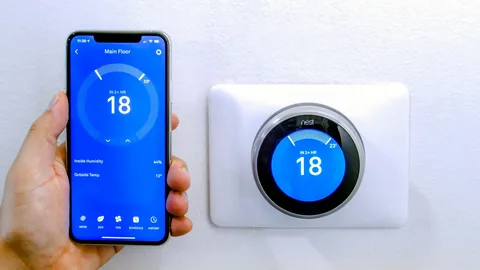
Depending on the model, it may connect to a home Wi-Fi network and allow users to adjust heating or cooling settings from a smartphone.
Some smart thermostats also support scheduling, usage reports, occupancy detection, and integration with compatible smart home platforms.
Not every thermostat offers the same capabilities, and not every HVAC system supports every model.
The right choice depends on the equipment already installed and the features the household actually needs.
Professional Smart Thermostat Installation in San Jose, CA
San Jose homes have different heating and cooling configurations. Some use traditional furnaces and central air conditioning, while others rely on heat pumps, ductless systems, or more specialized equipment.
These differences affect thermostat compatibility and installation requirements.
Homeowners seeking professional Wi-Fi thermostat installation in San Jose, CA can explore Heating and Air Experts LLC’s local thermostat setup, heating repair, and air conditioning services.
The company’s San Jose service-area page describes smart thermostat installation, programming, calibration, and HVAC integration.
Before purchasing a replacement, homeowners should identify their existing system and confirm whether the proposed thermostat supports its control requirements.
A compatible thermostat can improve convenience without requiring unnecessary changes to functioning equipment.
Reliable Programmable Thermostat Replacement in Fremont, CA
Fremont property owners may want better temperature control when replacing an outdated thermostat or upgrading an existing HVAC system.
For example, a household with changing work schedules may benefit from programmable heating and cooling settings.
Remote access may also be useful for people who want to adjust temperatures before returning home.
Through reliable programmable thermostat upgrades in Fremont, CA, Heating and Air Experts LLC advertises thermostat installation, setup, and support for compatible heating and cooling systems.
Its Fremont page discusses traditional thermostats, smart controls, Wi-Fi-enabled models, and programming assistance.
A professional evaluation can help determine whether a straightforward replacement is possible or whether additional wiring or configuration work is necessary.
Smart Thermostat vs. Programmable Thermostat
Although the terms are sometimes used interchangeably, these devices can offer different features.
Traditional Programmable Thermostats
A programmable thermostat allows users to establish temperature schedules for different times of day.
Some models provide weekday and weekend programming.
These controls can be useful for households with consistent routines.
Smart Thermostats
A smart thermostat may include scheduling along with remote access, connectivity, and automated adjustments.
Certain models provide usage information or work with compatible voice assistants.
Which One Should You Choose?
A programmable thermostat may be sufficient if your main goal is following a regular temperature schedule.
A smart thermostat may be more suitable if you value remote access, automation, or additional control features.
Compatibility, ease of use, and cost should guide the decision.
Benefits of Upgrading Your HVAC Thermostat
A properly selected thermostat can improve how you interact with your heating and cooling system.
Potential benefits include:
- More convenient temperature adjustments
- Programmable heating and cooling schedules
- Remote access on compatible models
- Better visibility into temperature settings
- Reduced unnecessary heating or cooling
- Improved control over occupied and unoccupied periods
- Easier coordination with household routines
- Access to selected maintenance reminders
Actual energy savings depend on the equipment, building conditions, settings, and how the thermostat is used.
A smart thermostat does not automatically make an inefficient HVAC system efficient.
Understanding HVAC Thermostat Compatibility
Compatibility is one of the most important considerations before installation.
Different HVAC systems use different control arrangements.
A thermostat designed for a conventional furnace and air conditioner may not support every heat pump or multistage system.
Some equipment also uses proprietary communication protocols.
Before selecting a thermostat, the installer should identify the heating and cooling equipment, available wiring, and required control functions.
Buying a device based only on appearance or smartphone features can lead to avoidable problems.
Thermostat Wiring and the C-Wire
Many smart thermostats require a dependable source of electrical power.
Some systems use a common wire, often called a C-wire, to provide continuous power.
However, wiring arrangements vary, and not every thermostat requires the same connections.
A missing C-wire does not necessarily mean an upgrade is impossible.
Depending on the equipment and thermostat, an approved alternative may be available.
Homeowners should avoid guessing at wire connections. Incorrect wiring can damage control components or prevent equipment from operating correctly.
A qualified HVAC technician can evaluate the existing setup and recommend an appropriate installation method.
Smart Thermostats for Heat Pump Systems
Heat pumps provide heating and cooling through the same equipment.
Some installations also include auxiliary or emergency heating functions.
The thermostat must support the heat pump’s specific control requirements.
Incorrect configuration may cause unnecessary auxiliary heat operation, inefficient performance, or poor temperature control.
For this reason, heat pump owners should verify compatibility before purchasing a thermostat.
Professional setup is particularly valuable when the system has multiple operating stages or specialized controls.
Thermostat Installation for Furnaces and Central AC
Many homes use a furnace for heating and a central air conditioner for cooling.
In these systems, the thermostat coordinates equipment operation according to the selected temperature and operating mode.
A replacement thermostat should support the relevant heating and cooling stages.
It must also be configured for the actual equipment rather than left on unsuitable default settings.
After installation, the technician should test heating, cooling, and fan operation.
This helps confirm that the thermostat communicates correctly with the system.
Can a Smart Thermostat Work With Ductless Mini-Splits?
Some ductless mini-split systems use proprietary controllers rather than conventional thermostat wiring.
As a result, not every smart thermostat can connect directly to every mini-split.
Certain systems offer manufacturer-specific smart controls or compatible third-party interfaces.
The correct solution depends on the equipment model and supported accessories.
Homeowners should check manufacturer compatibility before purchasing a controller.
Professional Thermostat Installation and Setup
Heating and Air Experts LLC provides professional smart thermostat installation and upgrade services for residential and commercial properties.
Its dedicated thermostat service page covers programmable and Wi-Fi-enabled controls, replacements, troubleshooting, programming, and HVAC compatibility.
The company also describes installation support for compatible thermostat products from brands such as Nest, Ecobee, and Honeywell.
The appropriate product and installation approach should be determined after reviewing the existing system.
The Smart Thermostat Installation Process
A professional installation generally includes several stages.
1. Existing System Assessment
The technician identifies the HVAC equipment and current thermostat configuration.
2. Compatibility Review
The proposed thermostat is checked against the system’s control requirements.
3. Wiring Inspection
Existing wiring and available power connections are evaluated.
4. Old Thermostat Removal
The previous control is disconnected using appropriate safety procedures.
5. New Thermostat Installation
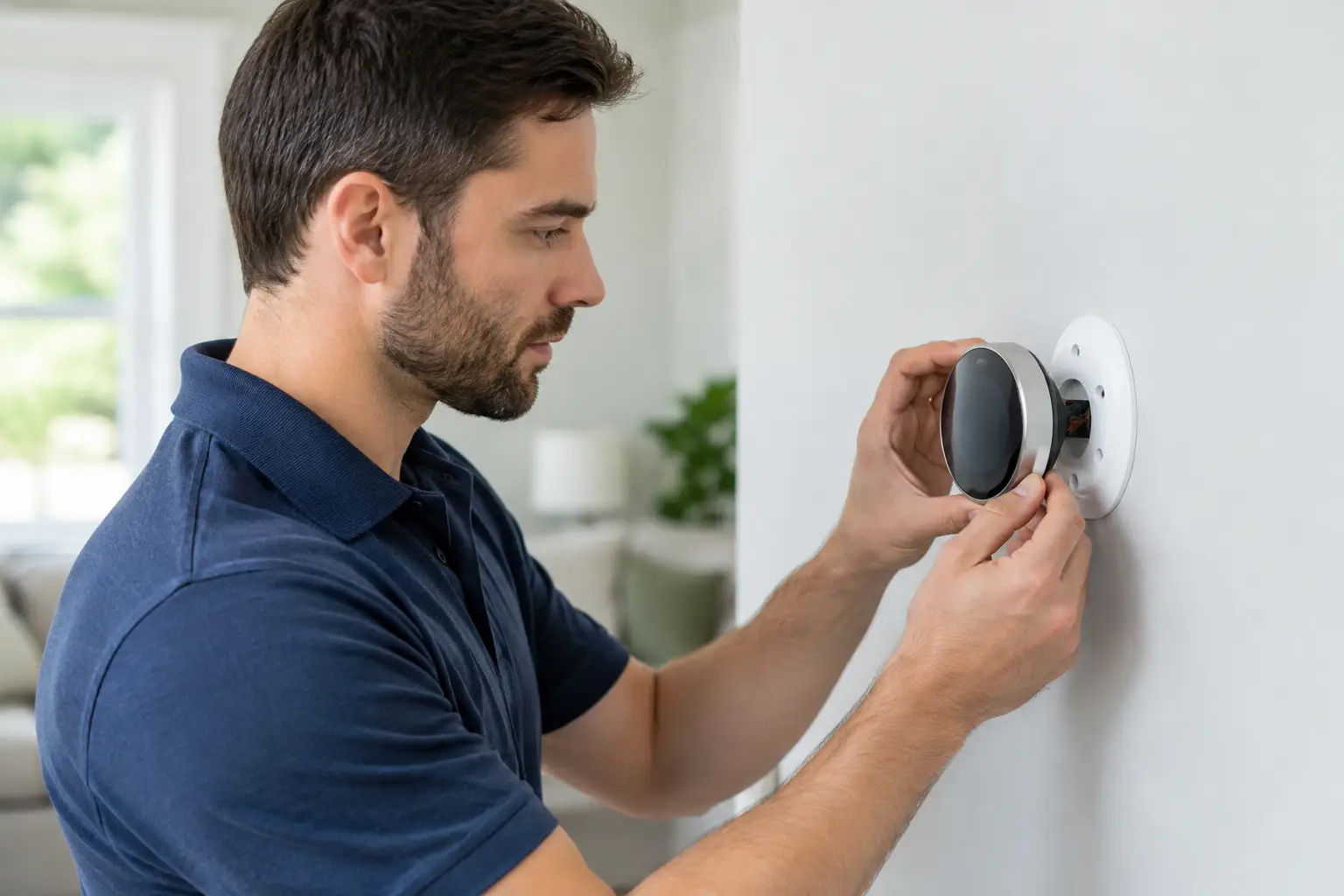
The replacement device is mounted and connected according to manufacturer instructions.
6. Equipment Configuration
Heating and cooling stages, system type, and other relevant settings are configured.
7. Wi-Fi and App Setup
Where supported, the thermostat is connected to the household network and mobile application.
8. System Testing
Heating, cooling, and fan functions are tested to confirm correct operation.
9. User Orientation
The technician explains basic controls, scheduling, and maintenance-related settings.
The exact process varies by thermostat and HVAC system.
Choosing the Right Thermostat Location
Thermostat placement can affect temperature readings.
A device installed in direct sunlight or near a heat-producing appliance may register temperatures that do not accurately represent the occupied space.
Locations near exterior doors, drafts, or poorly insulated surfaces may also create misleading readings.
The ideal position depends on the building’s layout and manufacturer guidance.
If the existing thermostat is poorly located, the installer can assess whether relocation would improve control.
Setting Up Wi-Fi and Smartphone Access
Many smart thermostats require a compatible wireless network to enable remote features.
During setup, users may need to install a manufacturer application and connect the thermostat to their account.
Some features require ongoing internet access.
Homeowners should also review account security settings, software updates, and privacy options.
A thermostat should remain usable for its essential supported functions even when certain connected features are unavailable, but specific behavior varies by product.
Creating an Effective Temperature Schedule
Scheduling is one of the most practical thermostat features.
A household may prefer one temperature while everyone is home and a different setting during sleeping hours or extended absences.
The best schedule depends on the HVAC system, insulation, comfort preferences, and daily routine.
Large temperature setbacks are not always appropriate for every heat pump or building.
Homeowners should follow equipment-specific guidance and adjust settings based on comfort and performance.
Can Smart Thermostats Lower Energy Bills?
Smart thermostats can help reduce unnecessary heating and cooling when users take advantage of suitable scheduling and control features.
However, savings are not guaranteed.
The results depend on factors such as:
- Existing thermostat settings
- Climate and weather
- Household occupancy
- HVAC efficiency
- Insulation quality
- Air leakage
- Equipment type
- User preferences
A household that already manages temperatures efficiently may see smaller improvements than one with an outdated control strategy.
The most useful goal is maintaining comfort while avoiding unnecessary equipment operation.
Common Signs Your Thermostat Needs Replacement
A thermostat may need inspection when it no longer controls the HVAC system reliably.
Possible symptoms include:
- Blank or unresponsive display
- Incorrect temperature readings
- Heating or cooling failing to start
- Frequent loss of programmed settings
- Unreliable buttons or touchscreen
- Intermittent connectivity
- Inconsistent system operation
- Equipment running when it should be off
These symptoms do not always mean the thermostat itself is defective.
Problems with wiring, power, sensors, or HVAC equipment can produce similar behavior.
Accurate diagnosis helps avoid unnecessary replacement.
Thermostat Troubleshooting Before Replacement
Some thermostat problems have relatively simple explanations.
A blank display may involve batteries or power supply issues.
Unexpected schedules may result from incorrect programming.
Connectivity problems may involve network settings rather than thermostat hardware.
However, electrical testing and wiring repairs should be left to qualified professionals.
If the thermostat appears to be operating normally but the HVAC system is not responding, the underlying problem may be elsewhere in the equipment.
Thermostat Replacement vs. HVAC Repair
Replacing a thermostat will not correct every heating or cooling problem.
A furnace with a failed ignition component, an air conditioner with a refrigerant problem, or a system with restricted airflow may require equipment repairs.
Heating and Air Experts LLC also provides heating and cooling diagnostics, maintenance, and repairs.
An HVAC technician should identify the actual cause before recommending a thermostat upgrade as the solution.
This approach helps property owners avoid paying for a device that does not address the problem.
Smart Thermostat Installation for Commercial Buildings
Small offices, retail spaces, and other commercial properties may benefit from programmable or connected temperature controls.
The right solution depends on the building’s HVAC design, occupancy patterns, and management needs.
A simple commercial suite may use a conventional thermostat, while a larger property may have more complex control requirements.
Commercial owners should evaluate access permissions, scheduling, system compatibility, and maintenance responsibilities before selecting equipment.
How Much Does Smart Thermostat Installation Cost?
Installation costs vary according to the selected device and existing system.
Factors may include:
- Thermostat brand and model
- HVAC compatibility
- Wiring condition
- Need for additional power connections
- Thermostat relocation
- Equipment configuration
- Network setup
- Troubleshooting requirements
- Labor and accessibility
A basic replacement may be less involved than an installation requiring wiring modifications or specialized system integration.
Request an estimate that explains both the device and installation work.
Questions to Ask Before Hiring an HVAC Technician
Before scheduling a thermostat upgrade, consider asking whether the technician has experience with your HVAC system type.
You may also want to clarify:
- Is the proposed thermostat compatible?
- Will additional wiring be required?
- Does the installation include app setup?
- Will heating and cooling operation be tested?
- Can existing schedules be transferred?
- Are any system modifications necessary?
- What warranty applies to the equipment?
- Will the technician explain how to use the controls?
Clear answers help establish expectations and prevent misunderstandings.
Maintaining Your Smart Thermostat
Most smart thermostats require relatively little physical maintenance.
However, homeowners should keep the device clean according to manufacturer instructions and review software updates when available.
Check that schedules still reflect household routines.
If temperature readings seem inaccurate or equipment behavior changes, arrange an inspection.
The thermostat should also be considered as part of routine HVAC maintenance rather than treated as an isolated device.
Why Local HVAC Experience Matters
Homes in San Jose and Fremont can have different heating and cooling requirements depending on their age, layout, insulation, and equipment.
A technician familiar with residential and commercial HVAC systems can help determine whether a thermostat upgrade is appropriate and how it should be configured.
Heating and Air Experts LLC advertises thermostat installation, furnace services, air conditioning repairs, system replacements, and maintenance throughout the Bay Area.
Its website maintains dedicated service-area pages for San Jose and Fremont.
Conclusion
Smart thermostat installation can make heating and cooling control more convenient, especially for homeowners interested in programmable schedules, remote access, and compatible automation features.
The most important part of the upgrade is selecting a thermostat that works correctly with the existing HVAC equipment.
Professional compatibility checks, wiring, configuration, and system testing help support dependable operation.
For property owners in San Jose and Fremont, Heating and Air Experts LLC offers thermostat installation and related heating and cooling services.
To discuss a thermostat upgrade or request an appointment, contact Heating and Air Experts LLC at (510) 518-8470 or heatingandairexpertsllc@gmail.com.
Frequently Asked Questions
Can I install a smart thermostat on any HVAC system?
Not necessarily. Compatibility depends on the heating and cooling equipment, control wiring, system stages, and thermostat specifications. A professional assessment can help identify a suitable model.
Do all smart thermostats need a C-wire?
No. Power requirements vary by model. Some thermostats use a C-wire, while others support approved alternative arrangements. Always follow manufacturer instructions.
Will a smart thermostat reduce my electricity bill?
It may help reduce energy use through appropriate scheduling and temperature control, but actual savings depend on household habits, equipment, and building conditions.
Does Heating and Air Experts LLC install smart thermostats in San Jose?
Yes. The company’s San Jose service-area page advertises thermostat installation, programming, calibration, and HVAC integration.
How long does a thermostat replacement take?
A straightforward compatible replacement may be relatively quick. Wiring changes, troubleshooting, or more complex HVAC systems can increase the installation time.
Does Heating and Air Experts LLC provide thermostat upgrades in Fremont, CA?
Yes. Its Fremont service-area page describes programmable and smart thermostat installation, Wi-Fi setup, and related HVAC services.