Need air duct cleaning in San Jose, CA? Learn warning signs, cleaning methods, airflow concerns, maintenance tips, and when professional duct service is useful.
Why Clean Air Ducts Matter
Air ducts quietly move heated and cooled air throughout a home or business every day. Because most ductwork is hidden above ceilings, below floors, or behind walls, homeowners rarely think about its condition until dust, odors, weak airflow, or indoor comfort problems become noticeable. Over time, dust, pet hair, construction debris, pollen, and other particles can collect around registers and within accessible sections of the HVAC distribution system.
Heating And Air Experts LLC provides heating, cooling, air duct cleaning, and thermostat services for residential and commercial properties in California. Duct cleaning should be approached as part of overall HVAC care rather than treated as a cure for every indoor air problem.
A professional evaluation can help determine whether visible contamination, renovation debris, airflow concerns, or another condition makes cleaning appropriate.
Signs Your Ductwork May Need Attention
Not every dusty room means the duct system needs cleaning. Household dust can come from fabrics, outdoor air, pets, open windows, and ordinary activity. However, several signs together can justify a closer look at the HVAC system.
Common signs include:
- Dust collecting heavily around supply registers
- Debris visible inside accessible vents
- Persistent musty or stale odors when the system runs
- Unusual amounts of dust returning soon after cleaning
- Weak airflow from certain registers
- Debris left after remodeling or construction work
- Pet hair accumulating near return-air grilles
- Evidence that pests have entered ductwork
- Long periods without HVAC system inspection
- Uneven comfort that may involve airflow restrictions
The important step is identifying whether the issue is actually inside the ducts or related to filters, equipment, leaks, humidity, or other indoor conditions.
What Professional Air Duct Cleaning Includes
Professional air duct cleaning services focus on removing accumulated dust, dirt, and debris from relevant parts of the duct system using equipment designed for HVAC cleaning.
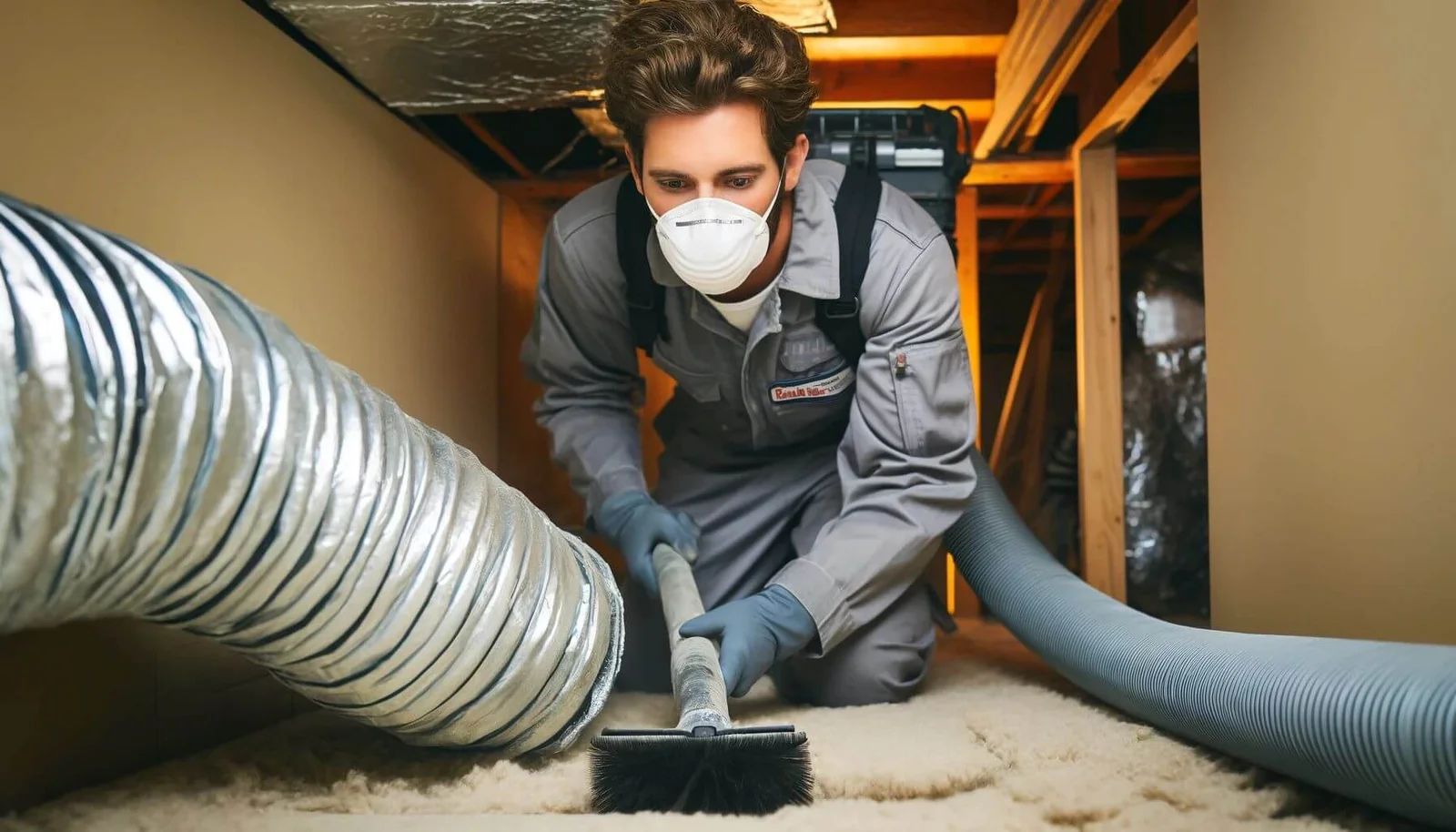
The process can begin with an inspection of supply registers, return grilles, accessible ductwork, filters, and nearby HVAC components. Technicians may use high-powered vacuum equipment and specialized agitation tools to loosen material and capture it rather than allowing debris to spread through occupied rooms.
The exact procedure depends on the duct layout, building size, accessibility, and condition of the system. Cleaning should be systematic. Simply vacuuming the visible register opening does not address debris farther inside the distribution network.
Why Inspection Should Come Before Cleaning
A good duct service begins with understanding the system. If one room has weak airflow, debris may not be the only possible cause. A disconnected duct, crushed flexible section, closed damper, dirty filter, equipment issue, or poor system balance can create similar symptoms.
Inspection can help identify conditions that cleaning alone will not correct.
Technicians should also look for signs of moisture because wet duct materials require more attention than ordinary dust. If moisture is entering through condensation, roof leaks, plumbing problems, or HVAC issues, the source should be corrected rather than simply cleaning the visible residue.
This diagnostic step keeps duct cleaning focused on conditions where it can provide practical value.
Residential Duct Cleaning in San Jose, CA
Homeowners considering residential duct cleaning in San Jose, CA should look at the entire HVAC system rather than focusing only on vents that are easiest to see.
Return-air grilles often collect significant dust because they pull room air back toward the equipment. Supply registers can gather debris around their edges, especially when filters have been neglected or remodeling work has released fine particles into the home.
Before service, note which rooms seem dustier, whether odors appear only when heating or cooling starts, and whether airflow has changed. These observations can help a technician understand whether cleaning, filter service, duct repair, or another HVAC task is most appropriate.
Whole House Duct Cleaning After Renovations
Remodeling can produce fine dust from drywall, wood cutting, sanding, flooring, insulation, and other construction activities. Even when work areas are covered, particles can travel through open doors or be drawn toward return-air grilles.
If the HVAC system operated during a dusty renovation, additional debris may have entered the distribution system. Whole house duct cleaning can be considered after major remodeling when visible construction dust has reached registers or accessible duct sections.
Cleaning should complement good construction dust management rather than replace it.
HVAC Duct Cleaning and Airflow
Many homeowners schedule HVAC duct cleaning because they expect stronger airflow. Cleaning may help when substantial debris is physically restricting a duct or register, but airflow problems can have many causes.
Dirty air filters, blower issues, closed dampers, duct leaks, damaged flexible ductwork, undersized returns, or poorly balanced systems can all reduce airflow. A technician should evaluate these possibilities when certain rooms remain uncomfortable.
If cleaning is performed but a disconnected duct remains unrepaired, the comfort issue may continue. That is why airflow concerns should be diagnosed instead of assuming that visible dust explains every performance problem.
The most useful service addresses both cleanliness and the mechanical condition of the distribution system.
Why Air Filters Still Matter
Duct cleaning does not eliminate the need for regular filter care. The HVAC filter is designed to capture airborne particles before they circulate through equipment and, depending on system design, throughout the home.
A heavily loaded filter can restrict airflow and make the blower work harder. A missing or poorly fitted filter can allow more debris to move through the system.
Homeowners should use a filter appropriate for their HVAC equipment and follow manufacturer recommendations for inspection and replacement. Households with pets, remodeling activity, or high system usage may need to check filters more frequently.
Installing the highest-rated filter available is not always the right choice because excessive resistance can affect some systems. Compatibility matters.
Air Vent Cleaning Is Only Part of the Job
Visible registers and grilles are easy to wipe or vacuum, but air vent cleaning should not be confused with complete duct cleaning.
Registers can be removed and cleaned when appropriate, yet debris may exist farther inside supply branches or return ducts. A full professional service evaluates the connected system and uses collection equipment intended to keep loosened material controlled.
Homeowners can safely dust accessible vent covers as part of routine cleaning. However, pushing household vacuum hoses, brushes, or objects deep into ducts can damage flexible materials or dislodge components.
If substantial buildup is visible beyond the register opening, professional inspection is a safer next step.
Odors When the HVAC System Starts
A stale or dusty smell during the first few minutes of seasonal heating or cooling may have several possible causes. Dust on equipment, dirty filters, damp materials, drain issues, or contamination within the air distribution system can all contribute.
Persistent odors should be investigated rather than repeatedly covered with fragrances.
Pay attention to whether the odor occurs in every room or only one area. Also note whether it appears only during heating, only during cooling, or whenever the blower runs.
These details can help distinguish a duct concern from an equipment, moisture, or room-specific issue. If the smell is burning, electrical, or otherwise unusual, stop treating it as a cleaning problem and arrange appropriate HVAC evaluation.
Moisture Inside Ductwork Needs Investigation
Moisture and duct systems are a poor combination. Condensation, roof leaks, plumbing leaks, or HVAC drainage problems can introduce water around ducts or nearby building materials.
Cleaning visible residue without correcting the moisture source can allow the condition to return.
Technicians should identify where moisture originates and whether insulation, duct liner, or surrounding materials have been affected. Some wet porous materials may require replacement rather than simple surface cleaning.
Homeowners should report ceiling stains, recurring condensation, musty odors, or damp areas near registers. Proper moisture control protects both the duct system and nearby building components.
Whole House Duct Cleaning in San Francisco, CA
Property owners seeking whole house duct cleaning in San Francisco, CA should consider duct condition alongside filters, registers, return-air pathways, and overall HVAC performance.
Older homes, renovation projects, pets, and long periods without system inspection can all create reasons to look more closely at the distribution system. However, cleaning should still be based on actual conditions rather than an automatic calendar date.
A professional inspection can identify whether visible debris is significant, whether airflow concerns point to another issue, and whether duct materials are suitable for the proposed cleaning method.
How to Prepare for Duct Cleaning
Preparation can make the service easier and help protect belongings.
Clear furniture, boxes, and fragile items away from registers and return grilles when possible. Tell the technician about rooms with limited access, recent renovations, pets, allergies, unusual odors, or previous HVAC problems.
Ask whether the system will be shut down during cleaning and how long access to different rooms may be required.
Homeowners should also know where the air handler, furnace, or major HVAC equipment is located. Keeping these areas accessible allows technicians to inspect filters and connected components without moving stored belongings.
Questions to Ask Before Hiring a Duct Cleaning Company
A professional contractor should be able to explain what will be cleaned and how the work will be performed.
Useful questions include:
- Which duct sections and components are included?
- Will both the supply and return sides be addressed?
- What equipment is used to collect loosened debris?
- How will occupied rooms be protected?
- Are filters inspected or replaced?
- How are moisture concerns handled?
- What happens if damaged ductwork is found?
- Is sanitizing recommended, and why?
- How long will the service take?
- What maintenance is recommended afterward?
Clear answers help homeowners compare actual procedures rather than choosing service based only on price.
Conclusion
Air duct cleaning can be useful when visible debris, renovation dust, odors, contamination, or other confirmed conditions affect the HVAC distribution system. The strongest approach starts with inspection because dust, weak airflow, and comfort problems can also involve filters, duct damage, equipment performance, moisture, or system balance.
Routine filter care, moisture control, and HVAC maintenance remain important after cleaning. Homeowners should monitor registers, airflow, odors, and unusual dust instead of assuming ducts need service on a fixed schedule.
When cleaning is appropriate, professional equipment and controlled procedures can remove accumulated material while protecting occupied areas. A complete assessment helps ensure the service addresses the real condition of the system rather than only the dust visible at vent openings.
Frequently Asked Questions
What are the main signs that air ducts may need cleaning?
Visible debris inside accessible ducts, persistent odors when the HVAC system runs, heavy dust around registers, construction debris, or evidence of pest activity can justify professional inspection.
Can air duct cleaning improve airflow?
It may help when significant debris is restricting airflow, but many airflow problems involve dirty filters, damaged ducts, closed dampers, blower issues, leaks, or system balance. Diagnosis should come first.
Should ducts be cleaned after home remodeling?
Cleaning may be useful after major renovation work if construction dust entered the HVAC system or is visible inside ducts and registers. Good dust control during construction can reduce contamination.
How often should residential duct cleaning be scheduled?
There is no universal schedule. Cleaning needs depend on actual duct condition, pets, filtration, remodeling, HVAC usage, and whether debris or contaminants have entered the system.
Can homeowners clean air ducts themselves?
Homeowners can safely clean accessible vent covers and maintain filters, but deep duct cleaning requires suitable equipment and care to avoid damaging flexible ducts or spreading debris through the home.
When should I call a professional duct cleaning contractor?
Consider professional service when you see significant debris, notice persistent HVAC-related odors, have construction dust in the system, suspect contamination, or need an inspection to determine whether cleaning is appropriate.