You notice it fastest on a cold morning – the thermostat clicks on, the vents start moving air, and instead of heat, your furnace is blowing cold air. That can feel like an emergency, especially if you have children at home, tenants calling, or a business that needs a comfortable indoor environment to stay operational.
The good news is that this problem does not always mean a failed furnace. In many cases, the cause is simple. In others, it points to a repair that should be handled quickly before it affects safety, comfort, or the life of the system. Knowing the difference can save time and help you make a smart decision.
Why a furnace blowing cold air happens
A furnace can blow cold or cool air for several different reasons, and not all of them mean the heater is broken. Sometimes the blower fan starts before the heat exchanger warms up. Sometimes the thermostat setting is off. Other times, the system is trying to protect itself from overheating, ignition failure, or restricted airflow.
What matters most is the pattern. If the air feels slightly cool only at startup and then turns warm, that may be normal. If the furnace keeps blowing cold air through an entire cycle, turns on and off repeatedly, or never reaches the set temperature, there is likely a fault that needs attention.
Start with the thermostat and air filter
Before assuming the worst, check the thermostat. A very common issue is the fan being set to ON instead of AUTO. When the fan is set to ON, the blower can run continuously even when the furnace is not actively heating. That means you will feel air coming through the vents that may seem cold.
Also verify that the thermostat is set to HEAT and the temperature setting is above the current room temperature. If the thermostat has weak batteries or is malfunctioning, it can send the wrong signals to the system.
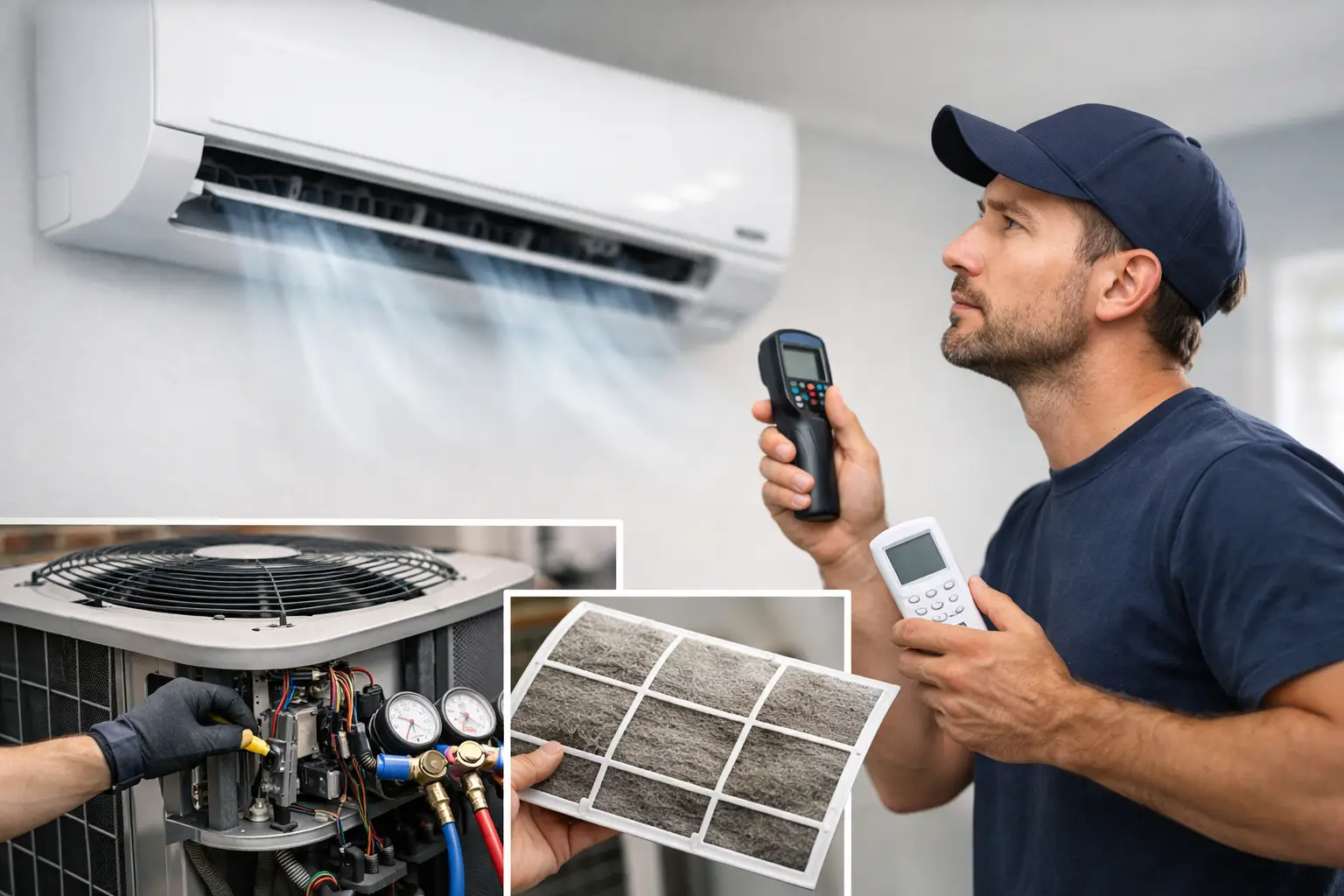
Next, inspect the air filter. A clogged filter restricts airflow, which can cause the furnace to overheat. When that happens, the safety limit switch may shut the burners off while the blower keeps running. To the homeowner, it feels like the furnace is blowing cold air, but the system may actually be cycling into a protection mode.
If the filter looks dirty, replace it with the correct size and type. This is one of the simplest fixes and one of the most overlooked.
A dirty flame sensor can stop the heat cycle
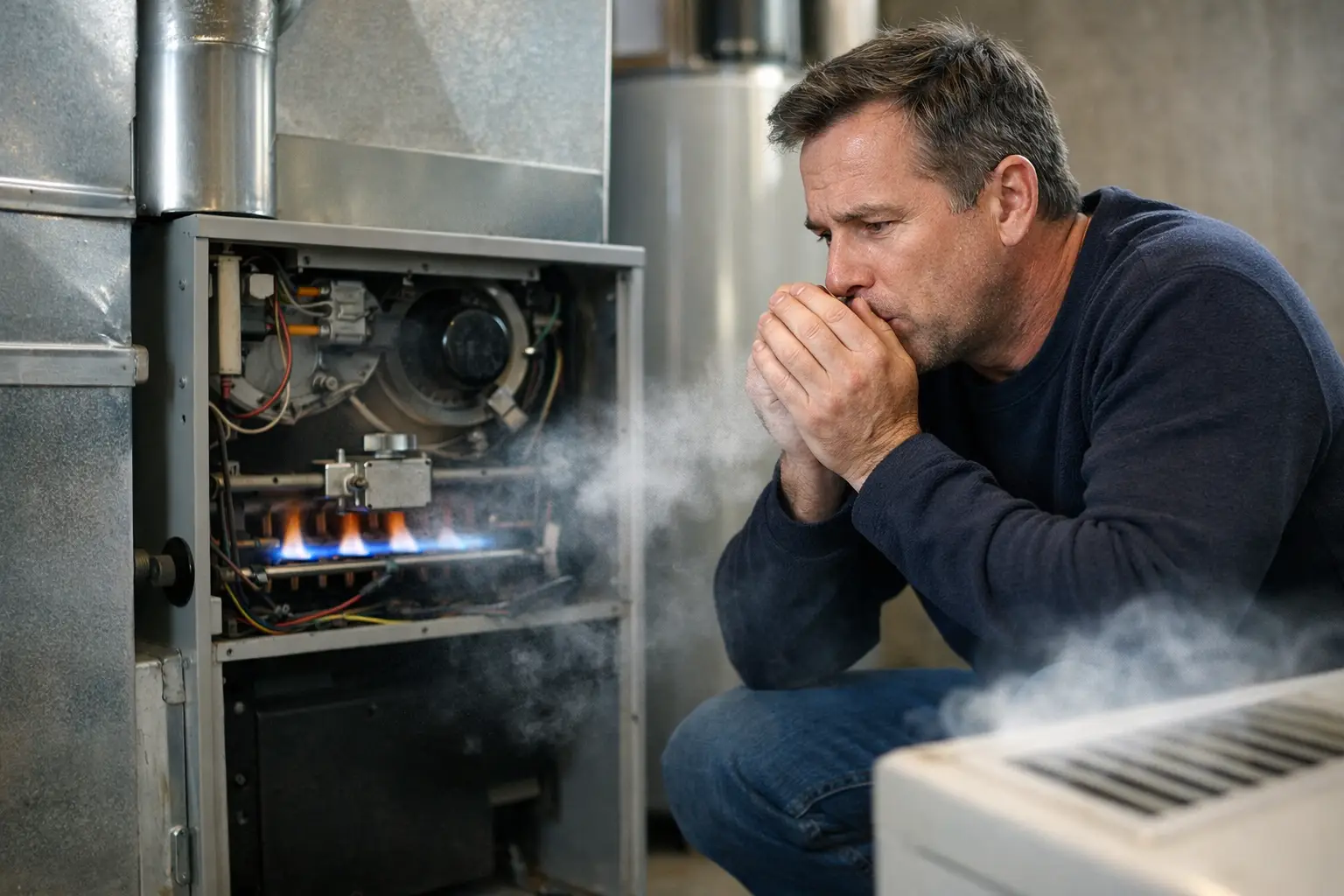
If your furnace starts, the burners light briefly, and then the heat cuts off, the flame sensor may be dirty or failing. The flame sensor is a safety component that confirms the burners are operating properly. If it does not detect flame, the system shuts the gas off.
The blower may continue to run even though the burners are no longer heating the air. That creates the impression of cold air coming from the vents.
This is a repair where the details matter. In some cases, a technician can clean the flame sensor and restore normal operation. In other cases, the part is worn or there is a larger ignition issue behind it. A quick diagnosis is important because repeated failed ignition cycles put extra strain on the system.
Ignition or pilot problems can leave you without heat
Modern furnaces usually use electronic ignition, while some older units still rely on a pilot light. If the ignition system fails, the furnace cannot produce heat even though the blower may still operate.
You might notice clicking sounds, short cycling, or no visible burner flame. On older systems, a pilot light that has gone out can cause a similar issue. While some homeowners are comfortable checking whether the pilot is lit, gas heating equipment should always be approached carefully. If you smell gas, shut the system down and call for professional service right away.
Condensate line issues can affect high-efficiency furnaces
High-efficiency furnaces create condensation as part of normal operation. If the condensate drain line becomes clogged, backed up, or frozen in colder conditions, the system may shut down heating as a safety measure.
This can be confusing because the furnace may still appear to be running in some way. You may hear the blower, see the thermostat calling for heat, or notice intermittent operation. If the unit is not heating consistently, a blocked condensate line is one possibility, especially on newer condensing furnaces.
Overheating from airflow restrictions is a bigger problem than it seems
Restricted airflow is one of the most common reasons a furnace stops heating properly. A dirty filter is one cause, but it is not the only one. Closed vents, blocked return air grilles, dirty evaporator coils, blower motor issues, and ductwork problems can all reduce airflow.
When airflow drops too low, heat builds up inside the furnace. The system then trips a safety control to prevent damage. The burners shut off, but the blower often keeps running to cool the unit down. That is why the air from the vents starts warm and then turns cool.
This kind of issue has trade-offs. Leaving it unresolved can increase wear on components and shorten system life, but replacing parts too quickly without checking the duct system, blower, and filter setup can lead to unnecessary costs. A thorough diagnostic is the right next step.
Leaky or damaged ducts can make the air feel cold
Sometimes the furnace is producing heat, but that heat is not reaching the rooms effectively. If ducts run through an attic, crawl space, garage, or other unconditioned area, leaks can allow warm air to escape before it gets to your vents.
In that case, the furnace may seem to be working harder than usual while the rooms still feel cold. The air at the register may feel lukewarm or even cool depending on how much heat is being lost along the way. This is especially common in older properties or buildings with neglected duct systems.
For Bay Area homes and commercial spaces, duct leakage can also affect indoor air quality and efficiency. Dust infiltration, uneven temperatures, and higher utility bills often show up alongside heating complaints.
What you can safely check before calling for repair
There are a few reasonable things to check on your own. Make sure the thermostat is set correctly, replace a dirty filter, confirm the furnace switch is on, and check the breaker if the system is not responding at all. Also look around the indoor unit for obvious signs of water near a high-efficiency furnace.
Beyond that, it is best not to force the system to keep running. Repeated resets can make diagnosis harder and may stress components further. If the furnace starts but does not stay heating, or if it keeps blowing cold air after the basic checks, professional service is the safer move.
When furnace blowing cold air needs immediate service
Some situations should not wait. If you smell gas, hear loud banging or scraping, see repeated system shutdowns, or have no reliable heat during cold weather, call for service right away. The same goes for commercial properties, multi-unit buildings, or homes with older adults, infants, or anyone sensitive to indoor temperature swings.
A trusted HVAC technician can identify whether the issue is a sensor, ignition failure, airflow restriction, control board problem, duct issue, or something more serious. Good service is not just about restoring heat quickly. It is also about making sure the recommendation is honest, the pricing is clear, and the repair addresses the real cause.
At Heating and Air Experts, that approach matters because customers need more than a temporary fix. They need dependable heat, straightforward communication, and workmanship they can rely on.
How to reduce the chances of it happening again
The best prevention is routine maintenance. Furnaces that are inspected and cleaned on schedule are less likely to develop cold-air complaints during peak heating season. A professional tune-up can catch dirty flame sensors, worn igniters, blocked drains, blower issues, and airflow problems before they leave you without heat.
It also helps to change filters regularly, keep supply and return vents unobstructed, and pay attention to small warning signs. If the system is cycling more often, heating unevenly, or making new noises, those clues are worth addressing early.
For older systems, it depends on the overall condition. A repair may be the right call if the furnace has been reliable and the issue is isolated. If breakdowns are becoming frequent and energy bills are climbing, replacement may be the more cost-effective long-term option.
When your furnace is blowing cold air, the main thing is not to guess for too long. A quick check can rule out simple causes, but reliable heat usually comes down to getting the right diagnosis and acting before a small problem turns into a bigger one.