Learn how smart thermostat installation in San Mateo, CA can improve temperature control, scheduling, HVAC coordination, remote access, and daily comfort.
A thermostat may be one of the smallest parts of an HVAC system, but it has an important job: telling heating and cooling equipment when to start, stop, and maintain the selected temperature. When a thermostat becomes unreliable, outdated, difficult to program, or incompatible with newer equipment, replacing it can make the system easier to control. Heating and Air Experts LLC provides residential and commercial HVAC services across the Bay Area, including thermostat installation, replacement, setup, and troubleshooting. Modern choices range from straightforward programmable models to smart thermostats with scheduling, mobile access, and system-monitoring features. The right option depends on the HVAC equipment already installed, available wiring, the level of control the property owner wants, and how the building is used. For homeowners and businesses in San Mateo, San Jose, and surrounding communities, proper installation is important because even an advanced thermostat needs correct wiring, configuration, and calibration to communicate properly with the HVAC system.
Why Thermostat Installation Matters
A thermostat acts as the control point between the occupants of a building and the heating or cooling equipment.
Accurate Temperature Control
A properly operating thermostat measures indoor temperature and signals the HVAC system according to the selected settings.
If temperature readings are inaccurate, the equipment may start or stop at inappropriate times. This can make rooms feel warmer or cooler than expected even when the heating or cooling system itself is working.
Professional thermostat installation can include smart thermostats, programmable models, replacements, setup, programming, and integration with compatible HVAC equipment.
Easier HVAC Scheduling
Programmable and smart thermostats can allow different temperature settings during different parts of the day.
A household may prefer one setting while everyone is home and another during regular periods when the property is empty.
The usefulness of scheduling depends on individual routines, so settings should be based on how the space is actually occupied.
Signs an Existing Thermostat Needs Attention
Not every comfort issue is caused by the thermostat, but several symptoms can justify an inspection.
HVAC System Does Not Respond
If the thermostat calls for heating or cooling but the system does not start, the problem may involve the thermostat, wiring, equipment, electrical supply, or another HVAC component.
Diagnosis should come before replacing parts.
Incorrect Temperature Readings
A thermostat that displays a temperature noticeably different from actual room conditions may need calibration, relocation, repair, or replacement.
Placement also matters. A thermostat exposed to direct sunlight, drafts, or unusual heat sources may not represent conditions throughout the rest of the room.
Unresponsive Controls
Buttons, displays, touchscreens, or other controls can become difficult to operate.
If settings cannot be changed reliably, replacing the thermostat may restore easier control of the HVAC system.
Choosing Between Programmable and Smart Thermostats
Modern thermostat options offer different levels of automation and connectivity.
Programmable Thermostats
A programmable thermostat allows users to create temperature schedules around predictable routines.
This can work well for households or businesses with relatively consistent operating hours.
These models generally provide more scheduling control than a basic manual thermostat without requiring all the connected features of a smart device.
Smart Thermostats
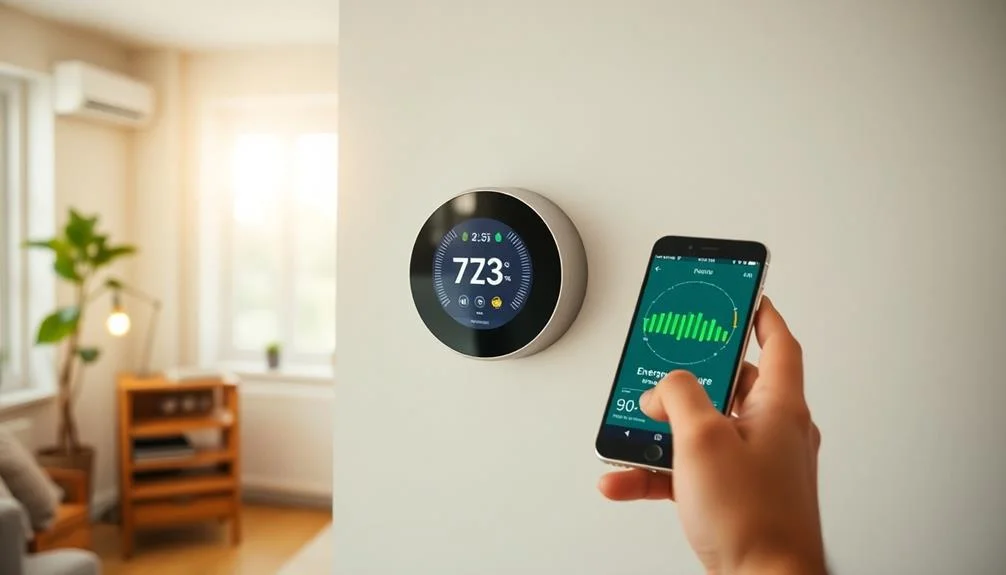
Smart thermostats may include Wi-Fi connectivity, mobile applications, remote temperature adjustments, scheduling, usage information, and other features depending on the model.
Some systems can also work with compatible smart-home equipment.
The availability of specific features depends on the thermostat and HVAC system, so compatibility should be confirmed before purchase.
Traditional Digital Thermostats
Some property owners simply want dependable temperature control without additional connectivity.
A straightforward digital thermostat may remain a practical choice when remote access and advanced scheduling are not priorities.
The best thermostat is the one that fits the HVAC system and the way the property owner wants to control it.
HVAC Compatibility Before Installation
A thermostat should not be selected only because its display or app looks appealing.
Heating and Cooling System Type
Furnaces, heat pumps, air conditioners, multi-stage systems, and other HVAC equipment can have different control requirements.
The thermostat must be able to communicate with the particular system installed at the property.
Some HVAC configurations may require features that are not supported by every thermostat.
Existing Wiring
Thermostat wiring can vary between properties.
Certain smart thermostats require a common wire or another compatible power arrangement to operate correctly.
Before installation, the existing wiring should be inspected rather than assuming that every new thermostat can directly replace the old one.
Additional HVAC Features
Properties with multiple heating or cooling stages, heat pumps, auxiliary heat, or other equipment may require additional configuration.
Incorrect settings can affect how the system responds to temperature changes.
This is one reason installation should include setup and testing rather than only mounting the thermostat to the wall.
How Professional Thermostat Installation Works
The process should begin with understanding the existing HVAC equipment.
Inspecting the Current System
The technician can identify the heating and cooling equipment, existing thermostat, wiring, and any relevant control requirements.
This helps determine whether the selected thermostat is compatible before the old unit is removed.
Installing and Connecting the Thermostat
The new thermostat is mounted and connected according to the HVAC configuration.
Wiring should be secured correctly, and the device should be positioned where it can measure indoor temperature appropriately.
Programming and Testing
After installation, the thermostat should be configured for the correct type of HVAC system.
Heating and cooling functions can then be tested to confirm that the equipment responds properly.
For connected models, Wi-Fi setup, mobile access, schedules, and basic controls may also need configuration.
Smart Thermostat Installation in San Mateo, CA
Heating and Air Experts specifically lists smart and programmable thermostat installation for homes and businesses on its San Mateo service page.
Property owners considering smart thermostat installation in San Mateo, CA should first identify which features would actually improve daily HVAC control.
Residential Thermostat Upgrades
Homeowners may want scheduling, remote access, easier temperature adjustments, or a more readable interface.
A technician can review the existing HVAC system and help determine which thermostat features are compatible.
The upgrade should make controlling the system easier rather than adding features that are unlikely to be used.
Commercial Thermostat Controls
Offices and other commercial properties may benefit from scheduled temperature changes based on operating hours.
The thermostat setup should reflect when employees, customers, or occupants are normally in the building.
Commercial properties with more complex HVAC arrangements may require additional evaluation before a thermostat is selected.
Thermostat Installation Services in San Jose, CA
Heating and Air Experts’ San Jose page also specifically supports traditional and smart thermostat installation, setup, programming, calibration, and HVAC integration.
Property owners looking for thermostat installation services in San Jose, CA should consider both the current HVAC system and how they want to manage indoor temperatures.
Replacing an Older Thermostat
An older thermostat may still operate but lack scheduling or connected controls.
Replacement can provide a simpler interface or more convenient control when the new unit is compatible with the existing HVAC system.
Setting Up Wi-Fi Features
For smart thermostats, installation may include connection to the property’s wireless network and setup of compatible mobile controls.
Property owners should understand how to change temperatures manually as well as through the app.
Basic operation should remain clear even when advanced features are available.
Getting More From a New Thermostat
Installation is only part of the process. Proper settings also influence how useful the thermostat becomes.
Create Realistic Schedules
Temperature schedules should reflect when people actually occupy the property.
Frequent unnecessary changes can make the system harder to manage.
Start with a simple routine and adjust it when household or business schedules change.
Avoid Constant Manual Adjustments
Repeatedly changing settings can make it difficult to evaluate whether the programmed schedule is working.
Give a new schedule enough time to determine whether it provides comfortable indoor conditions before making several changes at once.
Learn the Main Controls
Property owners should know how to change temperature, switch operating modes, adjust schedules, and respond if the thermostat loses its network connection.
Connected features are useful only when users understand the basic controls.
Choosing a Thermostat Installation Professional
A good installation should account for the entire HVAC control system.
Ask About Compatibility
Before purchasing or installing a thermostat, ask whether it is suitable for the existing furnace, air conditioner, heat pump, or other equipment.
Compatibility should be confirmed rather than assumed.
Discuss Existing HVAC Problems
If the system already short-cycles, fails to reach temperature, or behaves inconsistently, mention those symptoms before replacing the thermostat.
A new control will not correct an unrelated mechanical HVAC problem.
Ask About Setup and Testing
Installation should include correct configuration and confirmation that heating and cooling equipment responds properly.
If smart features are part of the system, ask how remote access, schedules, and basic settings work before the service is completed.
Conclusion
Thermostat installation can improve how homeowners and businesses control heating and cooling equipment, especially when an existing thermostat is outdated, unreliable, or lacks useful scheduling features. The right thermostat should be selected around the HVAC system rather than chosen only for appearance or connected technology.
For properties in San Mateo and San Jose, programmable and smart thermostats can provide different levels of scheduling and remote control. Compatibility, wiring, system type, placement, configuration, and calibration all need to be considered before installation.
A professional setup should also include testing so the HVAC equipment responds correctly to thermostat commands. After installation, simple schedules and a clear understanding of the controls can make the new device easier to use.
Choosing an appropriate model and configuring it correctly helps make the thermostat a practical control point for everyday indoor comfort.
Frequently Asked Questions
What is a smart thermostat?
A smart thermostat is an HVAC control device that may provide scheduling, Wi-Fi connectivity, mobile access, remote temperature control, and other features depending on the model.
Can any smart thermostat work with my HVAC system?
No. Compatibility depends on the heating and cooling equipment, wiring, number of stages, heat-pump configuration, and other control requirements.
What is the difference between a programmable and smart thermostat?
A programmable thermostat allows scheduled temperature settings. A smart thermostat may add features such as Wi-Fi connectivity, mobile control, usage information, or other connected functions.
Why is my thermostat not controlling the HVAC system correctly?
Possible causes include wiring problems, incorrect configuration, thermostat failure, placement issues, or problems with the HVAC equipment itself. Professional diagnosis can help identify the source.
Can a thermostat be replaced without replacing the HVAC system?
Yes, when the new thermostat is compatible with the existing heating and cooling equipment and wiring configuration.
What should be tested after thermostat installation?
Heating mode, cooling mode, temperature response, equipment cycling, system configuration, and any connected features should be checked to confirm that the thermostat communicates correctly with the HVAC system.