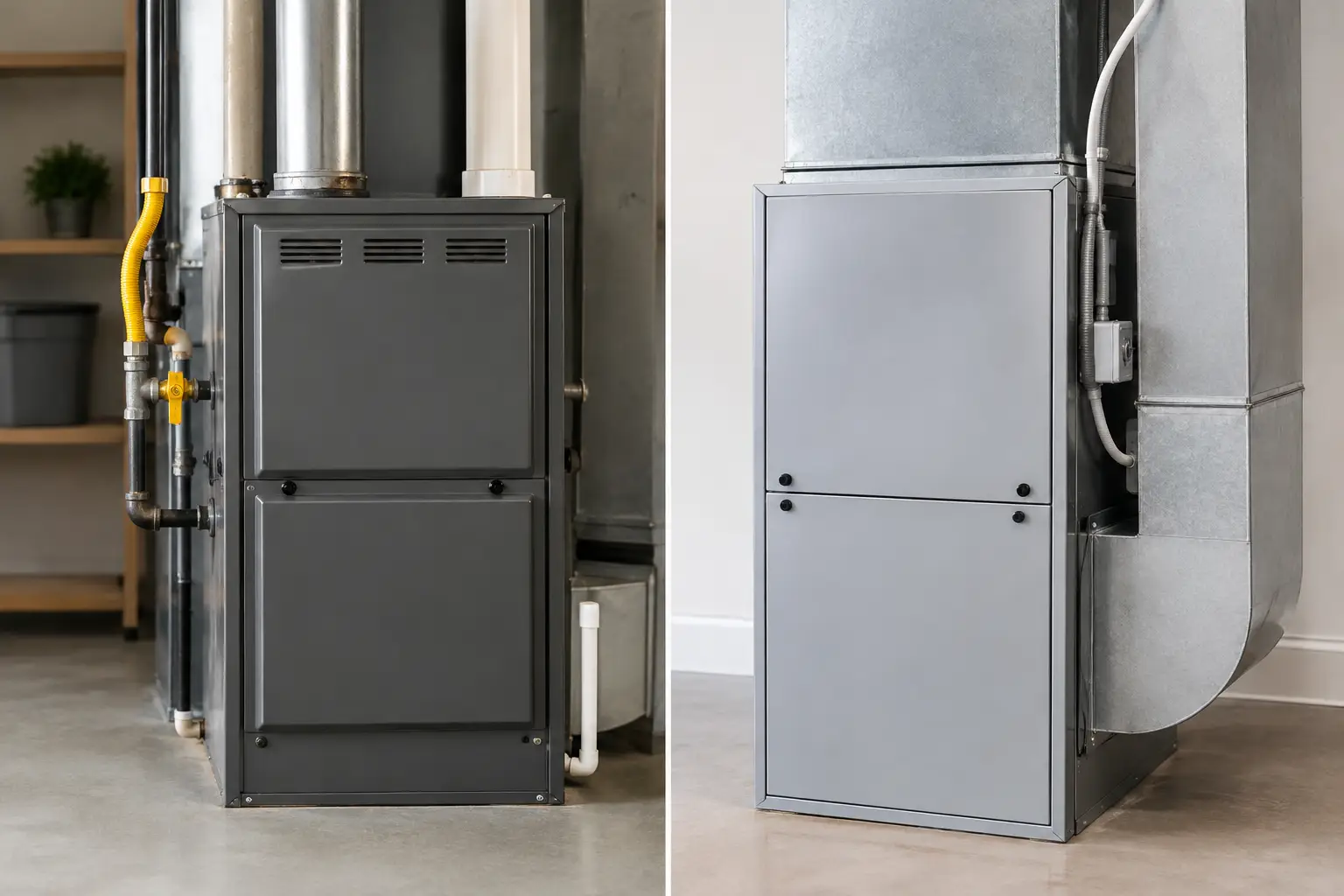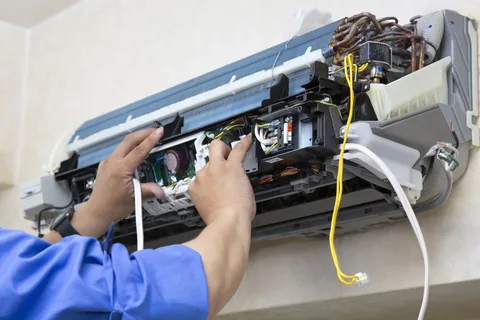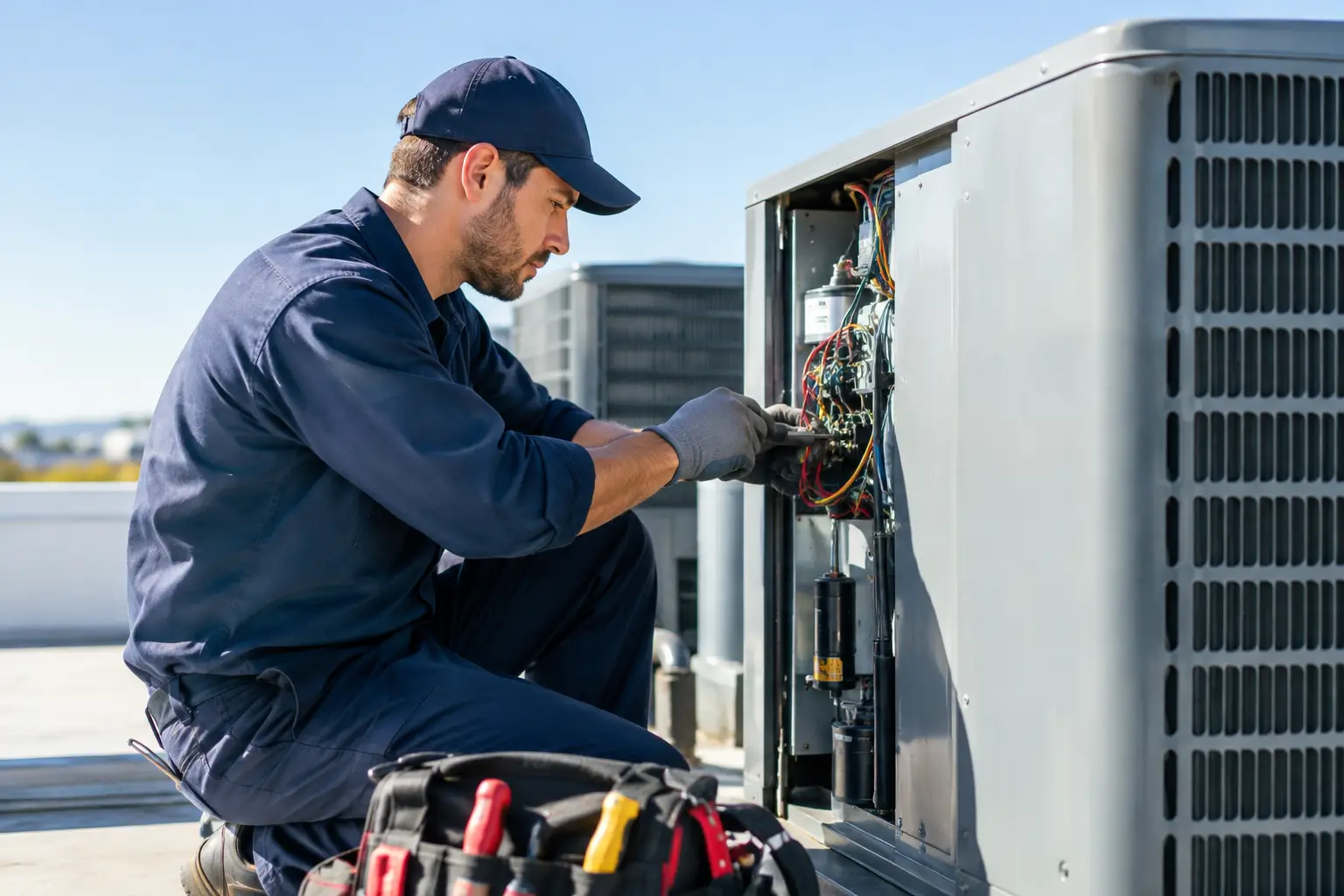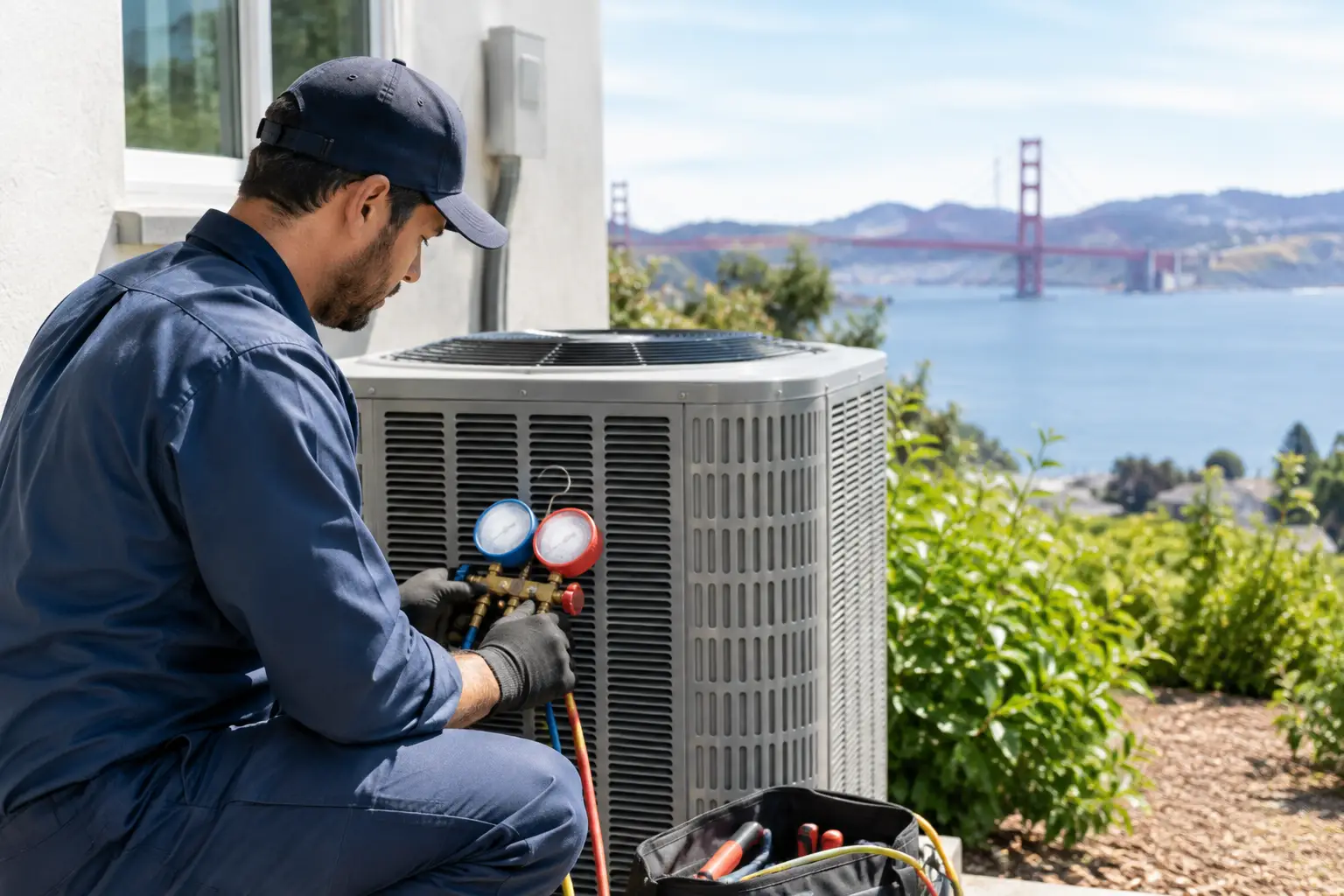
A failed air conditioner used to lead to a simple question: can it be repaired? Refrigerant regulation changes have made the answer more specific. The age of your equipment, the refrigerant it uses, the size of the leak, and the availability of replacement parts can all affect the most practical next step.
For Bay Area homeowners, property managers, and business owners, the good news is that an older system does not automatically need to be replaced because regulations have changed. A qualified technician can still diagnose the problem, explain your options clearly, and help you make a decision based on comfort, cost, and the expected life of the system.
What Refrigerant Regulation Changes Mean
Refrigerants are the fluids that move heat through an air conditioner or heat pump. They are essential to cooling in summer and, for heat pumps, to efficient heating in cooler weather. Federal and California regulations are gradually moving the HVAC industry away from refrigerants with a higher global warming potential, or GWP, toward alternatives with a lower environmental impact.
This is not a single overnight ban on every refrigerant in every existing system. It is a staged transition that affects the manufacture and installation of new equipment first, while also changing the long-term availability and cost of refrigerants used in older systems.
The biggest change many property owners will notice is in new residential air conditioning and heat pump equipment. For decades, R-410A was the standard refrigerant in much of the market. New equipment is increasingly designed around lower-GWP refrigerants, including R-454B and R-32. These options help manufacturers meet updated requirements, but they are not interchangeable with R-410A.
New systems using these refrigerants require equipment specifically engineered for them. They also require technicians who understand the updated safety procedures, components, charging requirements, and installation standards.
Existing equipment can usually remain in service
If your current system uses R-410A and is operating properly, you generally do not need to replace it just because newer systems use a different refrigerant. Regular maintenance, clean coils, correct airflow, and prompt leak repairs can help protect its performance and extend its useful life.
The same principle applies to many older systems using R-22. R-22 production and import ended in the United States years ago, so it is no longer the normal refrigerant for a new installation. However, existing R-22 systems can still be serviced with legally available recovered or reclaimed refrigerant when appropriate.
That said, R-22 can be expensive and increasingly difficult to source. If an older unit has a major leak, repeated refrigerant losses, a failing compressor, or multiple repair needs, replacement may make more financial sense than investing heavily in a system near the end of its service life.
Why a Refrigerant Leak Deserves Prompt Attention
Low refrigerant is not a normal part of air conditioner operation. Your system is sealed, so it should not need refrigerant added year after year. If levels are low, there is typically a leak that needs to be identified and repaired.
Continuing to add refrigerant without addressing the underlying issue can lead to higher operating costs, weaker cooling, ice on refrigerant lines, and unnecessary strain on the compressor. It can also leave you vulnerable to higher refrigerant prices as supplies for older equipment become more limited.
A proper service visit should focus on diagnosis, not simply adding refrigerant. The technician should evaluate system pressures, inspect likely leak points, assess overall equipment condition, and explain whether repair is a sound long-term choice. For a newer system with a repairable leak, fixing the leak and restoring the correct charge is often the right solution. For a 15- to 20-year-old unit with costly repairs ahead, the calculation may be different.
New Refrigerants Bring Different Installation Requirements
Lower-GWP refrigerants used in newer HVAC equipment are often classified as A2L, meaning they have low toxicity and mild flammability. “Mildly flammable” can sound alarming, but these systems are designed with specific safety controls and installation requirements to manage that classification.
The practical takeaway is simple: do not assume a new unit can be installed, repaired, or charged exactly like an older R-410A system. The equipment, refrigerant, tools, labeling, and procedures matter. A trained HVAC professional will confirm the system is compatible with the application, follow manufacturer instructions, and complete the installation in accordance with applicable code requirements.
This is especially relevant for property managers and commercial owners. Multi-unit properties, rooftop equipment, variable refrigerant flow systems, and spaces with unique occupancy or ventilation conditions may have additional design considerations. Early planning helps prevent delays when replacement equipment is needed.
How to Decide Between Repair and Replacement
Refrigerant regulations are one factor in an HVAC decision, but they should not be the only factor. A dependable contractor should give you honest guidance rather than pushing replacement before it is necessary.
Repair is often reasonable when the equipment is relatively new, the issue is isolated, replacement parts are available, and the system has otherwise been reliable. Maintaining an existing R-410A system can be a practical choice for many homeowners, particularly when there are no major mechanical concerns.
Replacement becomes more compelling when the system uses R-22, has frequent breakdowns, needs a major component such as a compressor, cannot maintain comfort, or has repair costs that are high compared with the value of a new system. Newer equipment may also improve energy efficiency, humidity control, temperature consistency, and heat pump performance.
The right decision depends on your budget, how long you expect to own or manage the property, and whether the system is meeting your comfort needs. For example, a homeowner planning to stay for many years may see greater value in a high-efficiency replacement. A property manager with a functioning R-410A unit may reasonably prioritize maintenance and plan for replacement at the next major repair.
Refrigerant Regulation Changes and California Properties
California has its own climate goals and refrigerant policies in addition to federal requirements. For Bay Area property owners, this means equipment choices may continue to evolve faster than they do in some other markets.
The most useful approach is to plan ahead rather than wait for a mid-summer breakdown. If your air conditioner or heat pump is aging, schedule an evaluation before it fails. You will have more time to compare efficiency options, consider electrical upgrades if needed, and select equipment that fits your home or building.
Businesses should also consider operational continuity. A failed unit can affect employees, customers, tenants, server rooms, inventory areas, and indoor air quality. Keeping service records and addressing small performance changes early can reduce the risk of an urgent replacement decision during peak cooling season.
Steps That Protect Your System and Budget
The best response to changing refrigerant standards is usually proactive maintenance. A seasonal tune-up can identify refrigerant leaks, airflow restrictions, worn electrical components, drainage issues, and declining performance before they become larger repairs.
Homeowners can help by replacing filters on schedule, keeping outdoor equipment clear of leaves and debris, and reporting warning signs quickly. Call for service if you notice warm air from the vents, weak airflow, ice on the indoor or outdoor unit, unusually high energy bills, hissing sounds, or cooling cycles that run far longer than usual.
When you receive a repair recommendation, ask which refrigerant your system uses, whether a leak has been confirmed, and what the expected repair cost means for the system’s remaining life. Clear answers make it easier to choose with confidence.
Refrigerant regulation changes are reshaping new HVAC equipment, but they do not have to create confusion around the system you own today. With accurate diagnosis, regular maintenance, and straightforward advice, you can protect your comfort now while making a sensible plan for the future.