A furnace that stops in the middle of a cold Bay Area evening can feel urgent, especially when the thermostat is calling for heat and nothing happens. If you are searching for how to reset tripped furnace equipment safely, start by treating the trip as a warning, not just an inconvenience. A single electrical interruption may be simple to correct. A breaker that trips again can point to a problem that needs professional diagnosis.
First, Make Sure It Is Safe to Reset the Furnace
Before touching the thermostat, furnace switch, or electrical panel, check for signs that make a reset unsafe. Do not reset the system if you smell gas, hear hissing near the gas line, see smoke, notice scorching around the furnace, or have a carbon monoxide alarm going off. Leave the building if there is a gas smell or carbon monoxide concern, then contact emergency services or your gas utility from a safe location.
A burning odor can sometimes be dust burning off at the beginning of heating season. However, a sharp electrical smell, melting-plastic odor, or visible damage is different. Turn the furnace off and arrange service rather than trying to get it running again.
You should also avoid resetting a breaker that is hot to the touch, buzzing, visibly damaged, or repeatedly tripping. Breakers are designed to cut power when they detect an overload, short circuit, or ground fault. Forcing power back on without finding the cause can damage equipment and create a fire risk.
How to Reset a Tripped Furnace Breaker
Many homeowners use the phrase “tripped furnace” when the furnace circuit breaker has turned off. If the furnace is otherwise safe to inspect, this is the correct place to begin.
- Set your thermostat to Off. This stops the furnace from trying to start while you restore power.
- Find your electrical panel and look for the breaker labeled furnace, HVAC, heating, air handler, or a similar description. A tripped breaker may sit in the middle position, but it can also look nearly on.
- Push the breaker firmly all the way to Off first. Then move it back to On. Do not hold it in place or force it if it will not reset.
- Return to the thermostat, select Heat, and set the temperature several degrees above the current room temperature. Give the system a few minutes to begin its normal startup sequence.
If the furnace starts and runs normally, monitor it through the next heating cycle. One trip can occur after a brief power interruption or an unusual electrical load. Still, it is worth paying attention if the system has been running harder than usual, making new noises, or struggling to keep rooms comfortable.
If the breaker trips immediately or shortly after the furnace starts, turn it off and do not reset it again. Repeated trips commonly involve a failing blower motor, damaged wiring, a weak capacitor, a shorted component, or another issue that requires testing by a trained HVAC technician.
Check the Furnace Service Switch Too
Most furnaces have a service switch mounted on or near the unit. It often resembles a standard light switch and may be located on a nearby wall, ceiling, or furnace cabinet. Make sure it is in the On position.
It is easy for this switch to be turned off accidentally during storage, cleaning, renovation work, or maintenance. If the breaker is on but the furnace has no power, the service switch is a reasonable item to check before scheduling a repair.
Reset the Thermostat Before Assuming the Furnace Failed
Sometimes the furnace has power, but the thermostat is not sending the signal to heat. Confirm that the thermostat is set to Heat rather than Cool or Off, and set the temperature above the room reading. If it uses batteries, replace weak batteries with new ones.
For smart thermostats, check whether the display is powered and whether an alert or error message appears. A thermostat that has gone offline after a power outage may need time to reconnect. Avoid changing advanced installer settings or bypassing thermostat wiring. Those steps can create additional problems and make a professional diagnosis less straightforward.
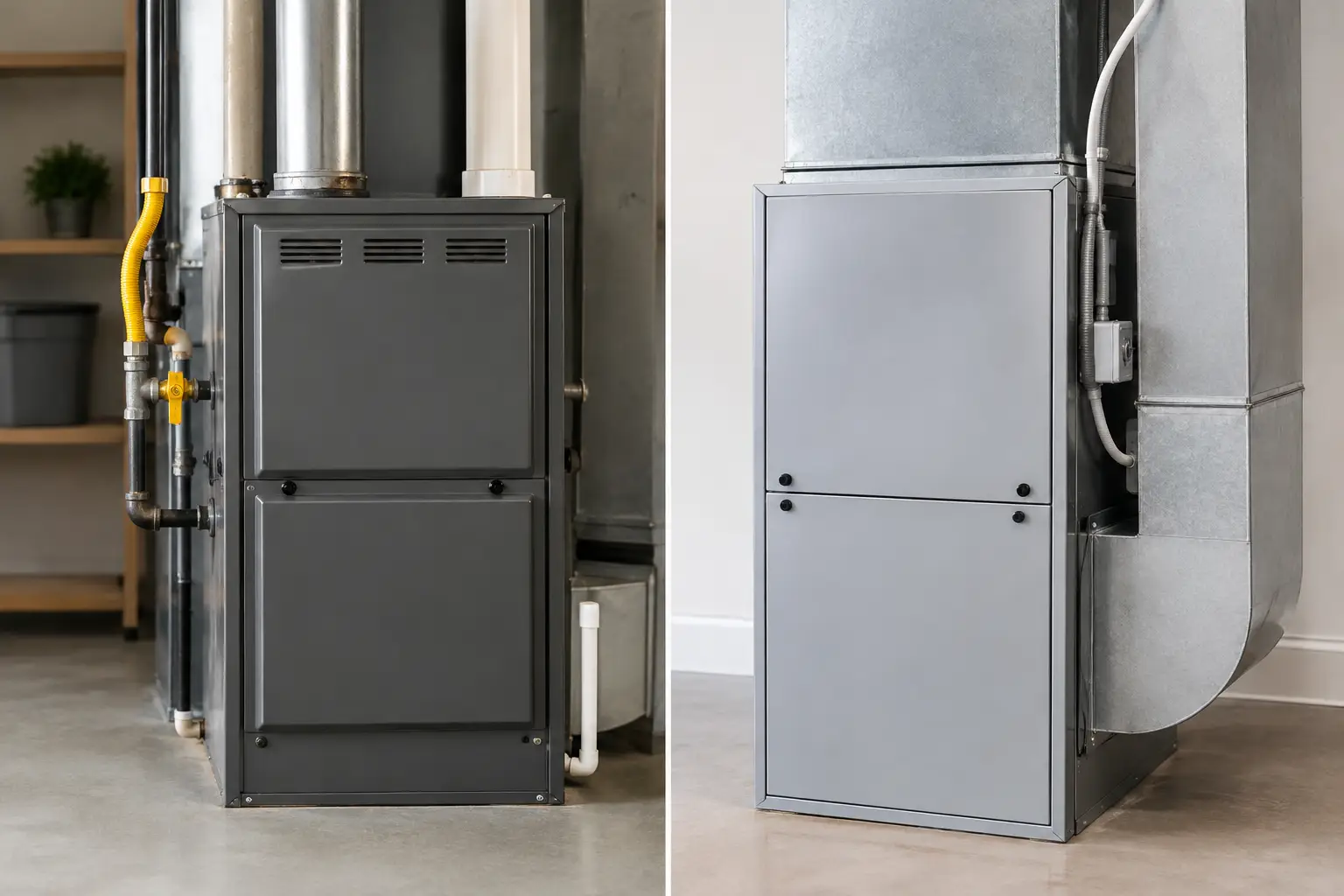
If you have a high-efficiency furnace, inspect the small drain line near the unit for an obvious loose connection or overflow around the condensate pump. These furnaces create water during operation, and a drainage backup can trigger a safety shutdown. Do not disassemble the furnace to clear internal drains, but noting what you see can help a technician identify the issue faster.
Does Your Furnace Have a Reset Button?
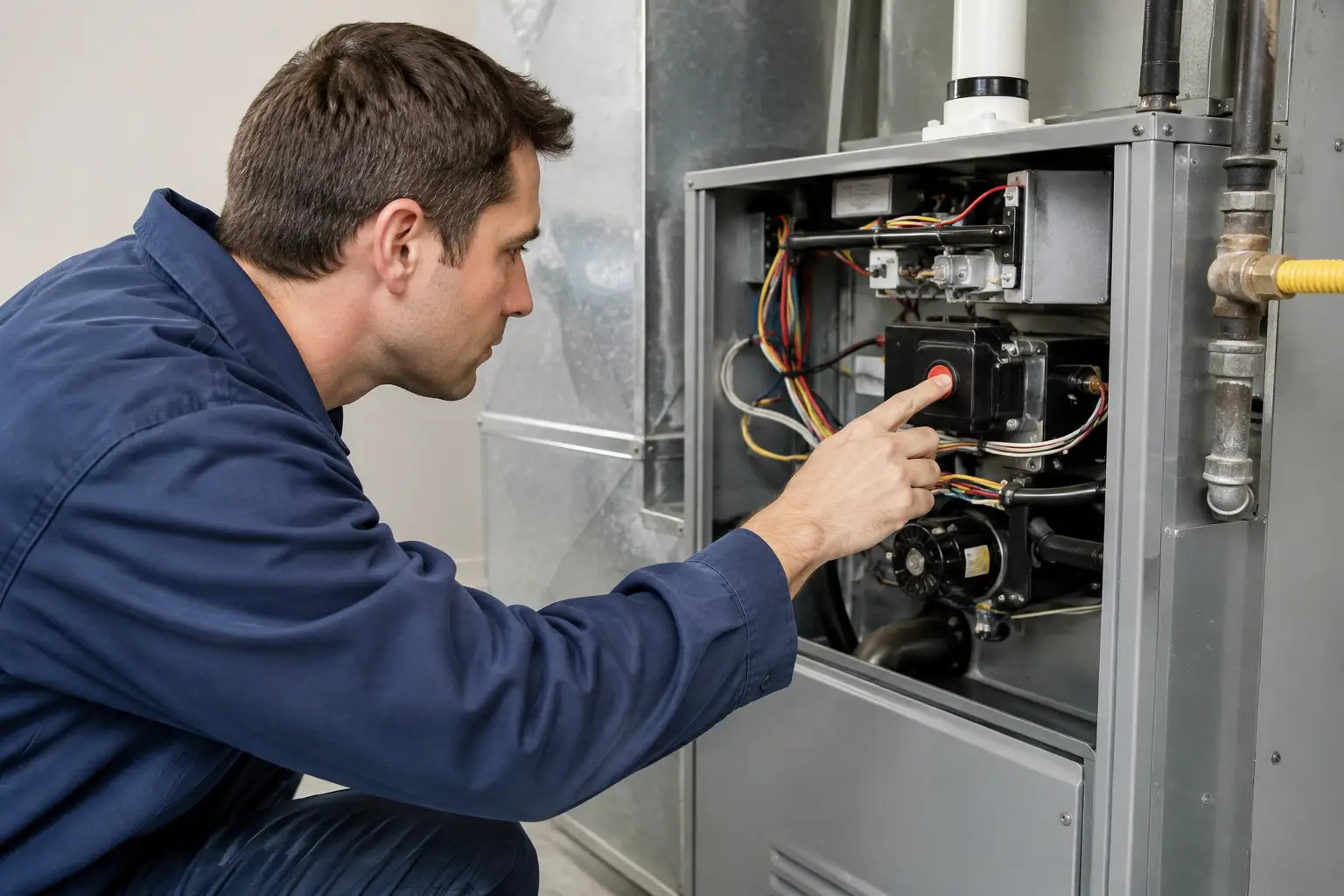
Some furnaces, particularly certain oil-fired models, include a clearly marked reset button. Many modern gas furnaces do not have a homeowner reset button in the way people expect. They use internal safety controls that shut the system down when they sense overheating, ignition trouble, venting concerns, or airflow problems.
Do not press internal switches or buttons unless your furnace manual specifically identifies them as homeowner-accessible and provides instructions. A manual-reset limit switch, rollout switch, or other safety device may have opened because of a serious condition, such as a blocked vent, overheating, or combustion problem. Resetting it without correcting the cause can be unsafe.
The safest reset for most residential gas furnaces is limited to the thermostat, external service switch, and dedicated circuit breaker. Anything inside the cabinet should generally be left to a qualified professional.
Why a Furnace Breaker Trips
A clean air filter is one of the simplest protections against furnace trouble. When a filter is heavily clogged, the blower works harder to move air. Restricted airflow can contribute to overheating and may strain electrical components over time.
If it is safe to do so, check the filter size and condition. Replace a dirty disposable filter with the correct type and direction of airflow. Do not run the furnace without a filter, and do not use a filter that is too restrictive for the system. Higher filtration is not always better if the furnace and ductwork are not designed to handle it.
Other causes are less visible. A blower motor may be drawing too much power. Loose electrical connections can heat up and fail. Rodents, age, moisture, and vibration can damage wiring. In older Bay Area homes, the electrical circuit itself may be undersized or shared in a way that causes nuisance trips. Property managers should take repeat tripping seriously, particularly in multi-unit buildings where a heating failure can affect tenants and maintenance schedules.
When to Call for Furnace Repair
Call for professional service if the breaker trips more than once, the furnace will not restart after one safe reset, or the system runs briefly and then shuts down. You should also schedule service for weak airflow, banging or screeching sounds, frequent cycling, rising utility bills, water near the furnace, or an error code that returns after a restart.
A certified technician can test electrical draw, inspect safety switches, verify airflow, examine ignition and venting components, and identify whether repair or replacement is the practical option. Honest diagnostics matter here. A reset may restore heat temporarily, but it does not repair the condition that caused the shutdown.
For homeowners and businesses across the Bay Area, Heating and Air Experts provides responsive furnace diagnostics, repairs, maintenance, and replacement guidance with upfront recommendations. The goal is not simply to get the heat back on for one night, but to help your system operate safely and reliably when you need it.
A furnace that trips once deserves attention. A furnace that keeps tripping deserves a professional answer before the next cold night turns a small warning into a complete no-heat call.