A room can feel sticky at 68 degrees, or dry and irritating at 72. That is why home humidity control matters as much as the temperature setting on your thermostat. In Bay Area homes, changing coastal air, seasonal rain, cooking, showers, and tightly sealed windows can all affect indoor moisture. When humidity moves outside a healthy range, comfort drops, energy use can rise, and your home may begin showing signs of moisture or dryness.
The goal is not to make the air feel perfectly dry. It is to keep moisture at a balanced level that supports comfortable breathing, protects furnishings, and helps your heating and cooling equipment operate as intended.
What Healthy Indoor Humidity Looks Like
Most homes feel best when relative humidity stays between 30% and 50%. In many cases, a target near 40% to 45% is a practical place to start. A small digital hygrometer can give you a reliable reading in the rooms where your family spends the most time.
The right setting can vary slightly by season and home construction. During cooler, rainy weather, indoor humidity may rise and require more ventilation or dehumidification. During dry spells or periods of winter heating, moisture levels can fall enough to cause dry skin, static electricity, and irritated sinuses.
A single reading does not tell the whole story. Check humidity at different times of day and in more than one room. A bathroom, basement, laundry area, or poorly ventilated bedroom can have a very different moisture level than the main living space.
Signs Your Home Has Too Much or Too Little Moisture
High humidity is often easier to notice because it makes rooms feel warmer than they are. Air may feel heavy, fabrics may seem damp, and windows can collect condensation. Over time, excess moisture can contribute to mold growth, musty odors, peeling paint, swollen wood, and dust mite activity.
Low humidity creates a different set of problems. You may wake up with a dry throat, notice frequent static shocks, or see gaps in wood flooring and furniture. Dry air can also make a home feel cooler, leading people to turn up the heat even when the thermostat is already set at a reasonable temperature.
Pay attention if you regularly notice any of these conditions:
- Condensation on interior windows, walls, or cold pipes
- A lingering musty smell in closets, bathrooms, or lower levels
- Peeling paint, warped trim, or visible mildew
- Dry skin, nose irritation, static shocks, or cracking woodwork
These symptoms do not always have one simple cause. A plumbing leak, poor drainage, inadequate exhaust ventilation, duct issues, or an oversized HVAC system may be part of the problem. An accurate diagnosis prevents you from spending money on a device that treats the symptom but not the source.
Home Humidity Control Starts With the Source
Before adding a humidifier or dehumidifier, look at where moisture is entering or leaving the home. Everyday activities produce a surprising amount of water vapor. Long showers, boiling water, drying clothes indoors, and even large gatherings can raise humidity quickly in a closed home.
Use bathroom exhaust fans during showers and for at least 15 to 20 minutes afterward. Run the kitchen hood when cooking, especially when boiling or simmering. If a fan is noisy, weak, or vents into an attic rather than outdoors, it may not be doing its job. Properly installed exhaust ventilation removes moisture before it spreads through the house.
Air leaks also affect humidity. Gaps around doors, windows, attic penetrations, and ductwork can allow outside air to move through the home unpredictably. In the Bay Area, that may mean damp coastal air enters during one period, while drier outdoor air pulls indoor moisture away during another. Sealing a home should be paired with proper ventilation, not treated as a stand-alone fix.
When a Portable Unit Is Enough
A portable dehumidifier can be useful for a small, isolated area with temporary moisture problems, such as a guest room or a closet that becomes damp during rainy weather. Choose a unit sized for the room, keep doors and windows closed while it runs, and empty or drain the reservoir as directed.
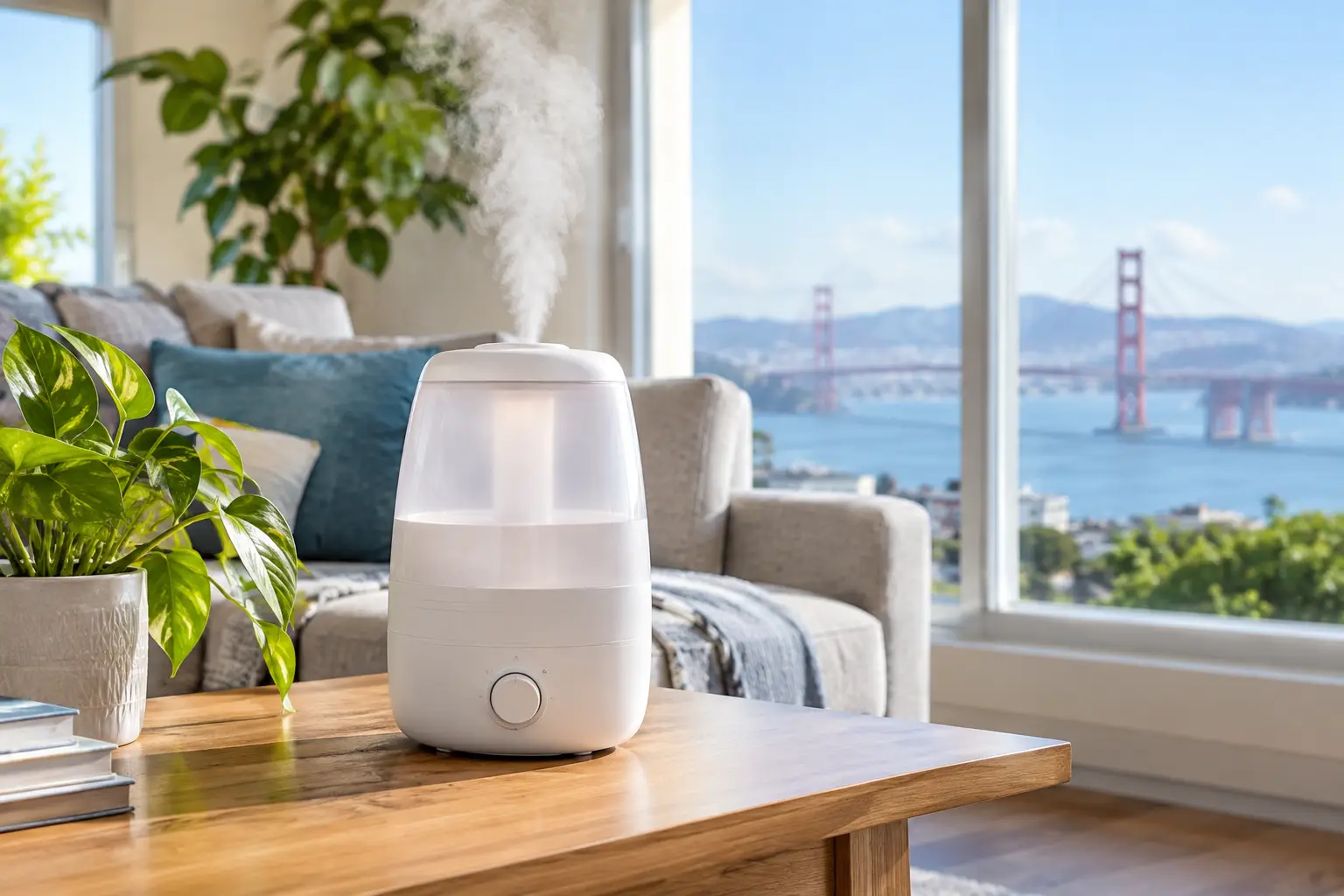
Portable humidifiers can help with dry bedrooms during the heating season. They require regular cleaning, though. A neglected tank or filter can circulate mineral residue or unwanted particles into the air. Use distilled water if the manufacturer recommends it, change filters on schedule, and do not run the unit continuously without checking humidity readings.
These devices have limits. They can help a specific room, but they rarely solve uneven comfort throughout a larger home. If multiple rooms feel damp, dry, or stuffy, the issue is more likely tied to ventilation, insulation, ductwork, or the central HVAC system.
How Your HVAC System Affects Indoor Moisture
Air conditioning naturally removes some humidity as it cools the air. But it must run long enough to do that work. An oversized air conditioner may cool the home quickly and shut off before removing sufficient moisture. The result can be a house that reaches the thermostat setting but still feels clammy.
On the other hand, restricted airflow, a dirty filter, refrigerant concerns, or a poorly maintained system can reduce cooling performance and moisture removal. If your AC runs constantly, struggles to cool, or leaves certain rooms humid, a service inspection can identify whether the system is operating correctly.
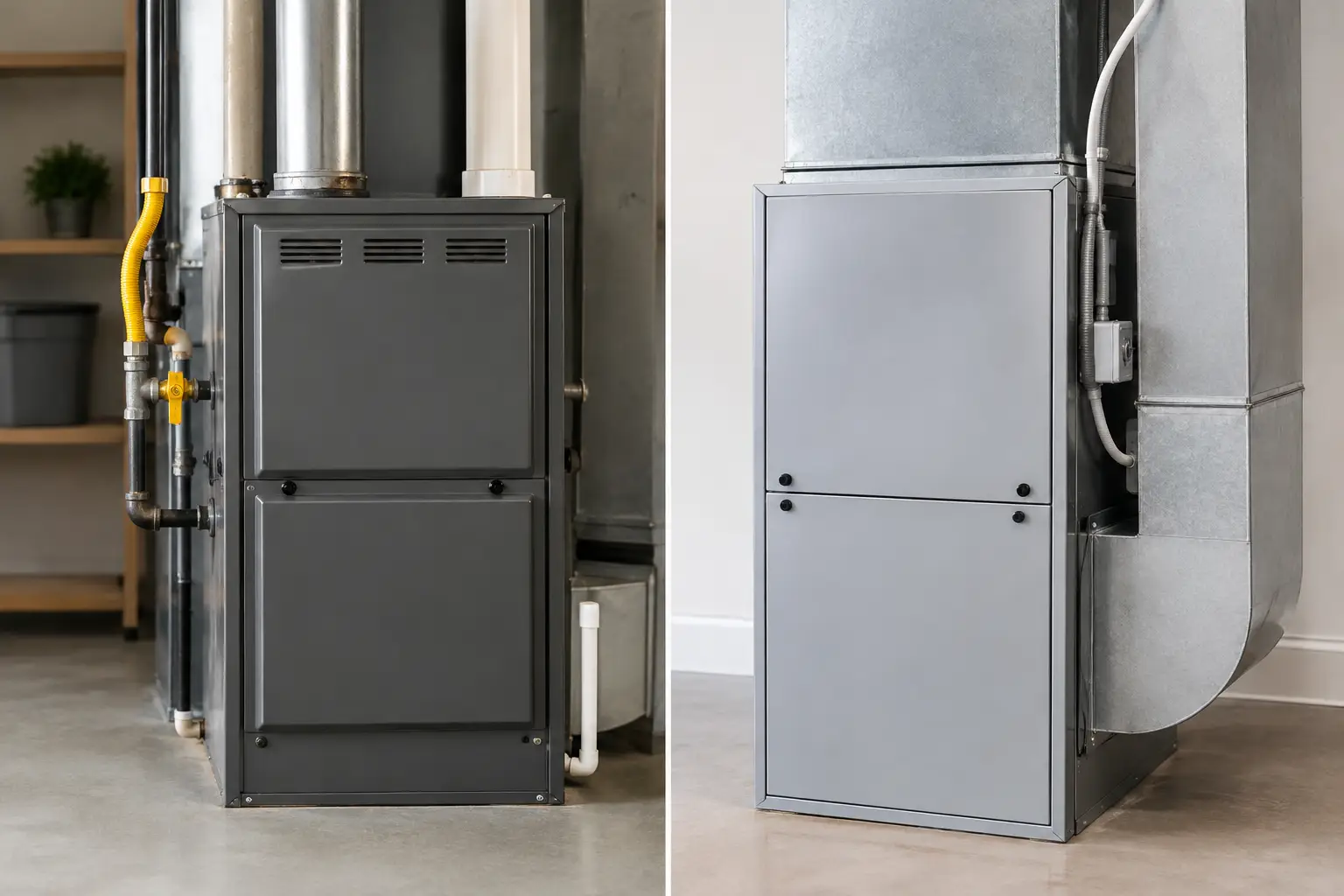
Ductwork matters as well. Leaky ducts can pull humid air from attics, crawlspaces, or wall cavities into the conditioned air stream. Poorly balanced ducts may leave one side of the home uncomfortable while another is overcooled. Professional duct inspection and airflow adjustments can improve both temperature consistency and humidity control.
For persistent whole-home dryness or moisture, a professionally selected whole-home humidifier or dehumidifier may be the better long-term solution. These systems work with the HVAC equipment to manage humidity across the house rather than in one room. The best option depends on the home’s size, layout, existing equipment, and the actual source of the problem.
Practical Habits That Protect Comfort and Your Property
Small changes can make a meaningful difference. Keep indoor doors open when appropriate to improve air circulation, but close doors to isolated problem rooms while using a portable unit. Avoid drying wet laundry indoors unless the space is well ventilated. Repair plumbing leaks promptly, even slow ones under sinks or behind appliances.
Change HVAC filters regularly based on the filter type, household conditions, and manufacturer guidance. A clogged filter does not directly create humidity, but it can restrict airflow and make comfort problems harder for your system to manage. During rainy months, check windowsills, closets, and exterior-facing walls for early signs of condensation or mildew.
Property managers should take repeat moisture complaints seriously, particularly in bathrooms, lower-level units, and spaces with limited airflow. What appears to be a tenant comfort issue may point to an exhaust fan failure, building-envelope leak, drainage concern, or mechanical imbalance that needs professional attention.
When to Call an HVAC Professional
Call for an evaluation when humidity remains above 60% or below 30% for extended periods, when mold or condensation keeps returning, or when your HVAC system cannot maintain comfortable conditions. A qualified technician can assess equipment performance, airflow, thermostat settings, filters, duct conditions, and ventilation instead of guessing at a solution.
For Bay Area homeowners and property managers, Heating and Air Experts provides clear recommendations based on what the system and home actually need. Whether the answer is maintenance, repair, ventilation improvement, duct service, or humidity equipment, honest guidance helps you avoid unnecessary upgrades and protect long-term comfort.
A comfortable home should not feel damp after the AC has cooled it or painfully dry when the heat is on. Start with a humidity reading, watch for recurring signs, and address the underlying cause early. A timely service visit can turn a frustrating comfort issue into a practical, lasting improvement.