A failing rooftop unit usually does not give you a convenient warning. It shows up as hot offices before opening, uneven temperatures across suites, rising utility bills, or a tenant calling to say the airflow suddenly dropped. When commercial rooftop unit repair is handled quickly and correctly, you protect comfort, avoid larger equipment damage, and keep your building running the way it should.
For Bay Area business owners and property managers, speed matters, but so does accuracy. A rushed guess can lead to repeat breakdowns, wasted money, and frustrated occupants. The right repair approach starts with a real diagnosis, clear communication, and a recommendation based on the condition of the unit, not a one-size-fits-all sales pitch.
When commercial rooftop unit repair becomes urgent
Rooftop units work hard, especially in commercial spaces with long operating hours, changing occupancy, and ventilation demands that shift throughout the day. A unit can appear to be working while still falling behind. That is why some of the most expensive problems begin as small performance issues.
If your building is taking longer to cool or heat, if some rooms are comfortable while others are not, or if your thermostat settings no longer seem to match actual indoor conditions, the system may already be under strain. Strange noises, short cycling, weak airflow, water around drains, and sudden spikes in energy use are also common warning signs. In many cases, the issue is repairable if addressed early. Waiting too long can turn a manageable service call into a major parts failure or an emergency shutdown.
For restaurants, offices, retail spaces, churches, warehouses, and multi-tenant properties, that downtime affects more than comfort. It can disrupt staff productivity, customer experience, equipment performance, and lease satisfaction. That is why response time and dependable workmanship matter so much with commercial systems.
What causes rooftop units to fail
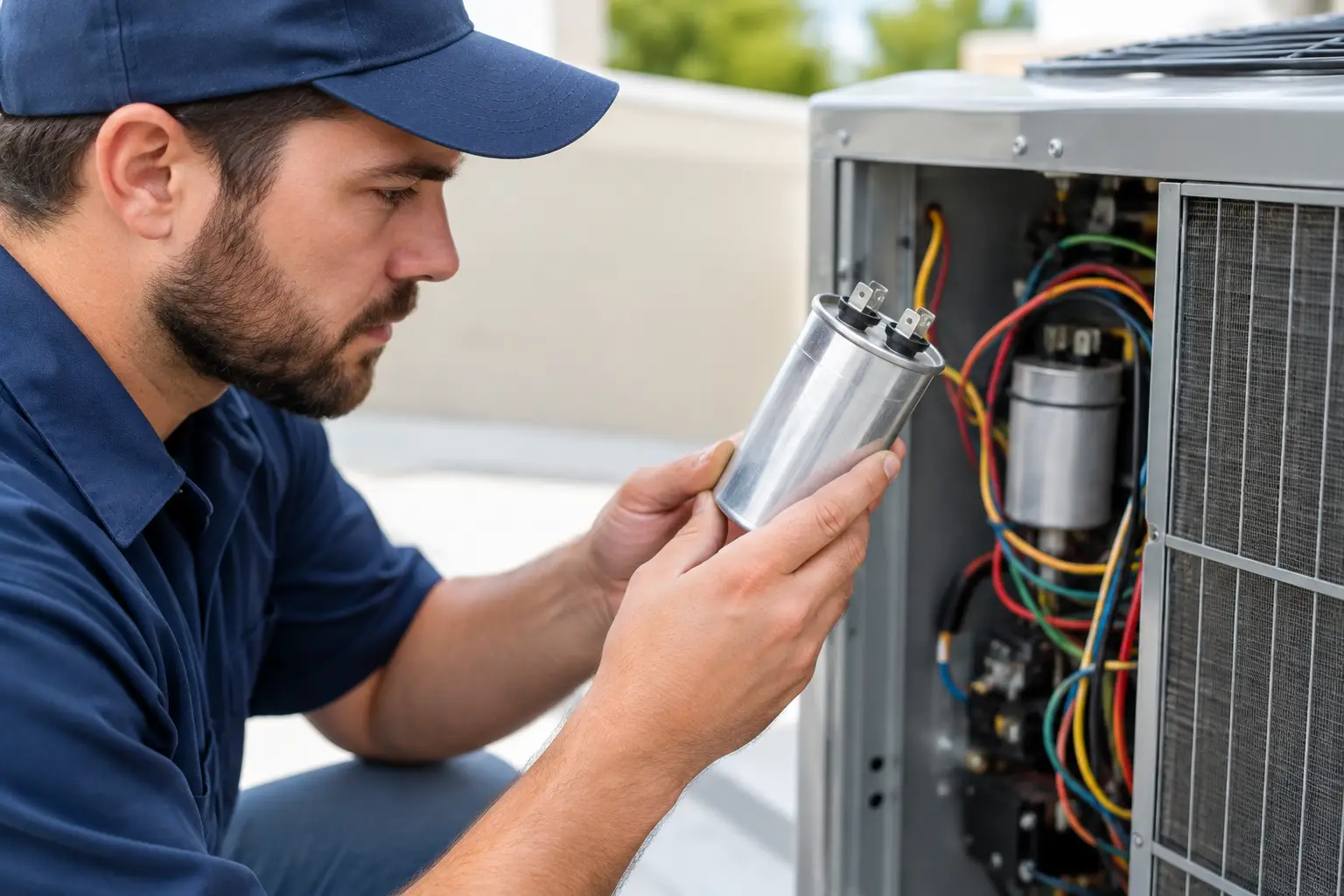
Most rooftop breakdowns are not caused by one dramatic event. They usually come from wear, deferred maintenance, or one neglected component forcing the rest of the system to work harder. Dirty coils reduce heat transfer. Failing capacitors and contactors affect startup and operation. Worn belts, blower issues, sensor problems, clogged drains, refrigerant leaks, and electrical faults all show up regularly in commercial service calls.
Age matters too, but age alone does not tell the whole story. A well-maintained unit can often stay reliable longer than expected, while a newer system can fail early if airflow is restricted or maintenance has been inconsistent. The building itself also affects performance. High internal heat loads, poor duct condition, outdoor exposure, and heavy daily runtime all add stress.
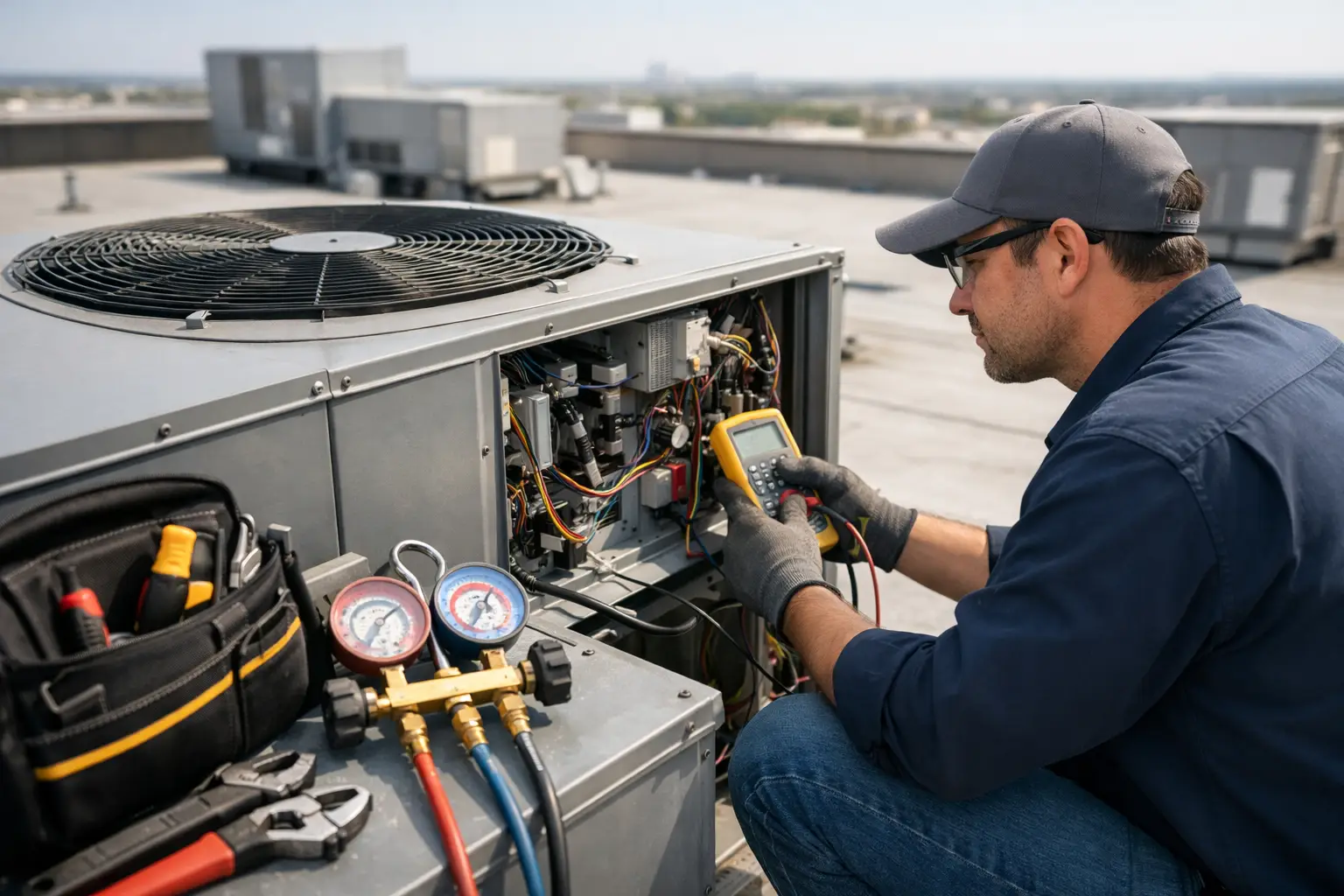
That is why commercial rooftop unit repair should never be treated like a simple parts swap. Good technicians look at the full operating condition of the equipment. They check airflow, controls, electrical components, refrigerant levels when appropriate, and how the unit is performing under load. Fixing the symptom without finding the cause usually leads to another call soon after.
What a proper repair visit should include
A professional commercial service visit should begin with inspection and testing, not assumptions. The goal is to identify what failed, what contributed to the failure, and whether the repair will restore dependable operation.
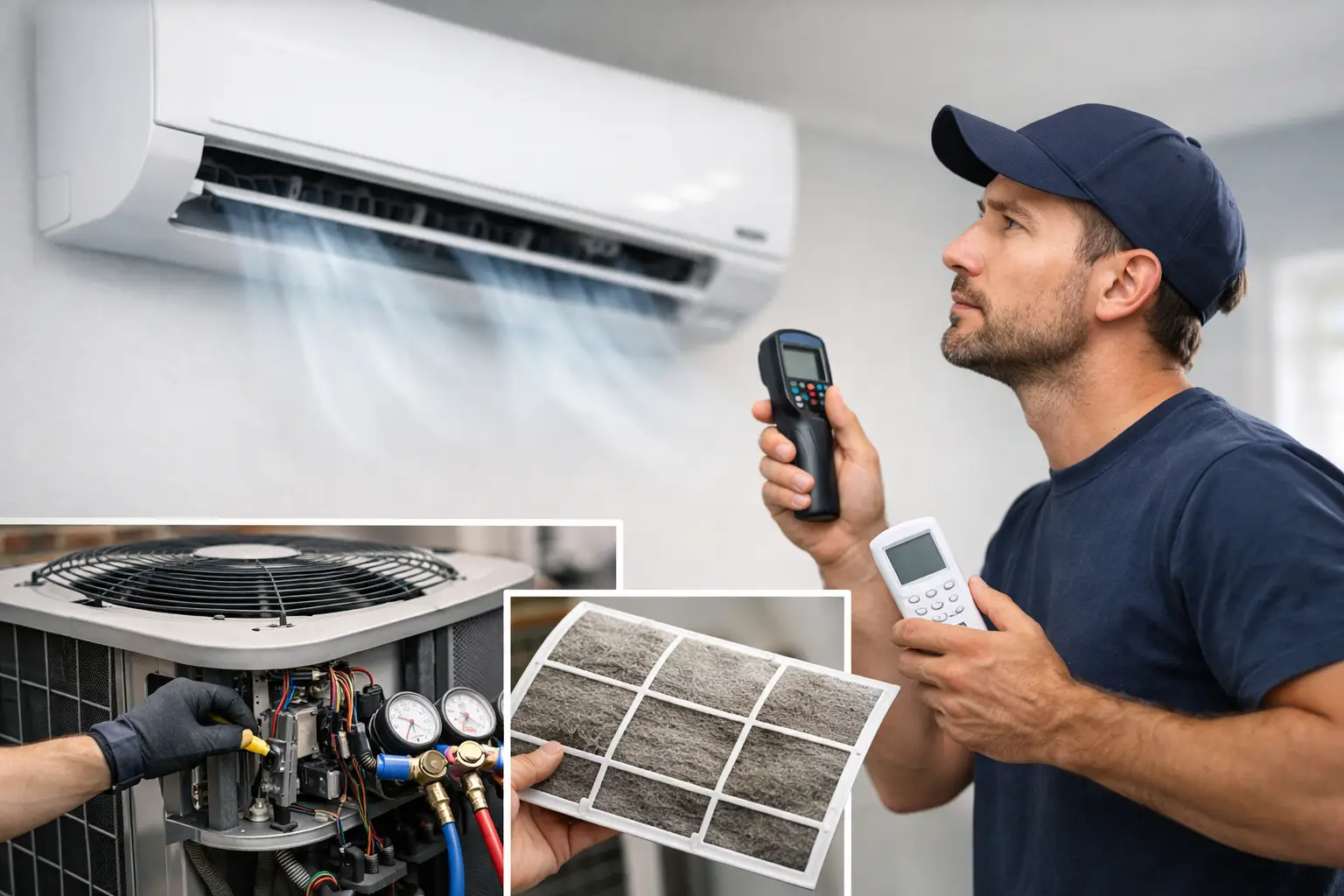
In practical terms, that means checking the thermostat and control signals, verifying electrical readings, inspecting motors and moving parts, evaluating filters and coil condition, reviewing drainage, and confirming whether heating or cooling stages are responding correctly. If the unit is cycling off on safety controls, freezing, overheating, or losing airflow, the reason needs to be confirmed before any recommendation is made.
For property managers, transparency is just as important as technical skill. You should know what is wrong, what repair is needed now, what condition the rest of the unit is in, and whether there are signs that replacement may become more cost-effective later. Honest guidance helps you budget and make decisions without pressure.
Repair or replace? It depends on the unit and the business
This is one of the most common questions with commercial rooftop systems, and the answer depends on more than unit age. If the problem is isolated and the cabinet, heat exchanger, compressor, and major components are still in serviceable condition, repair is often the smart move. A targeted fix can restore performance and extend useful life, especially when paired with maintenance.
On the other hand, if the unit has recurring refrigerant issues, major electrical failures, severe corrosion, poor efficiency, or repeated comfort complaints across the building, replacement may offer better long-term value. Emergency repairs on an unstable unit can keep you going temporarily, but they do not always make financial sense over time.
The key is having a contractor who will explain the trade-offs clearly. Some businesses need the lowest immediate cost to stay operational. Others want to reduce future downtime and utility expense. A reliable HVAC company should be able to support either goal with straightforward recommendations and upfront pricing.
Why maintenance has a direct impact on repair costs
Most rooftop units fail under preventable conditions. Dirty filters choke airflow. Unclean coils force longer run times. Loose electrical connections create intermittent issues that are hard to spot until a shutdown happens. Drain problems lead to water damage and control issues. Small wear items get ignored until they damage larger components.
Routine maintenance changes that pattern. It gives technicians the chance to catch weak capacitors, worn belts, dirty burners, failing motors, and airflow restrictions before they turn into urgent calls. For commercial properties, that is not just about extending equipment life. It is also about reducing disruption during business hours and keeping tenants or employees comfortable.
Well-maintained units are usually easier to diagnose, less expensive to repair, and more predictable to manage. That matters when you oversee multiple locations or need to control operating costs across a portfolio.
Choosing a contractor for commercial rooftop unit repair
Not every HVAC company is equipped for commercial work, and rooftop systems require more than basic service knowledge. Access, safety, controls, ventilation requirements, and occupancy needs all add complexity. You want certified technicians who can diagnose efficiently, communicate clearly, and complete repairs with minimal disruption to the property.
Look for a company that offers fast scheduling, emergency response, and experience with commercial systems across different building types. Clear estimates matter. So does follow-through. If a contractor cannot explain the issue in plain terms or avoids giving you a realistic picture of the system’s condition, that is a problem.
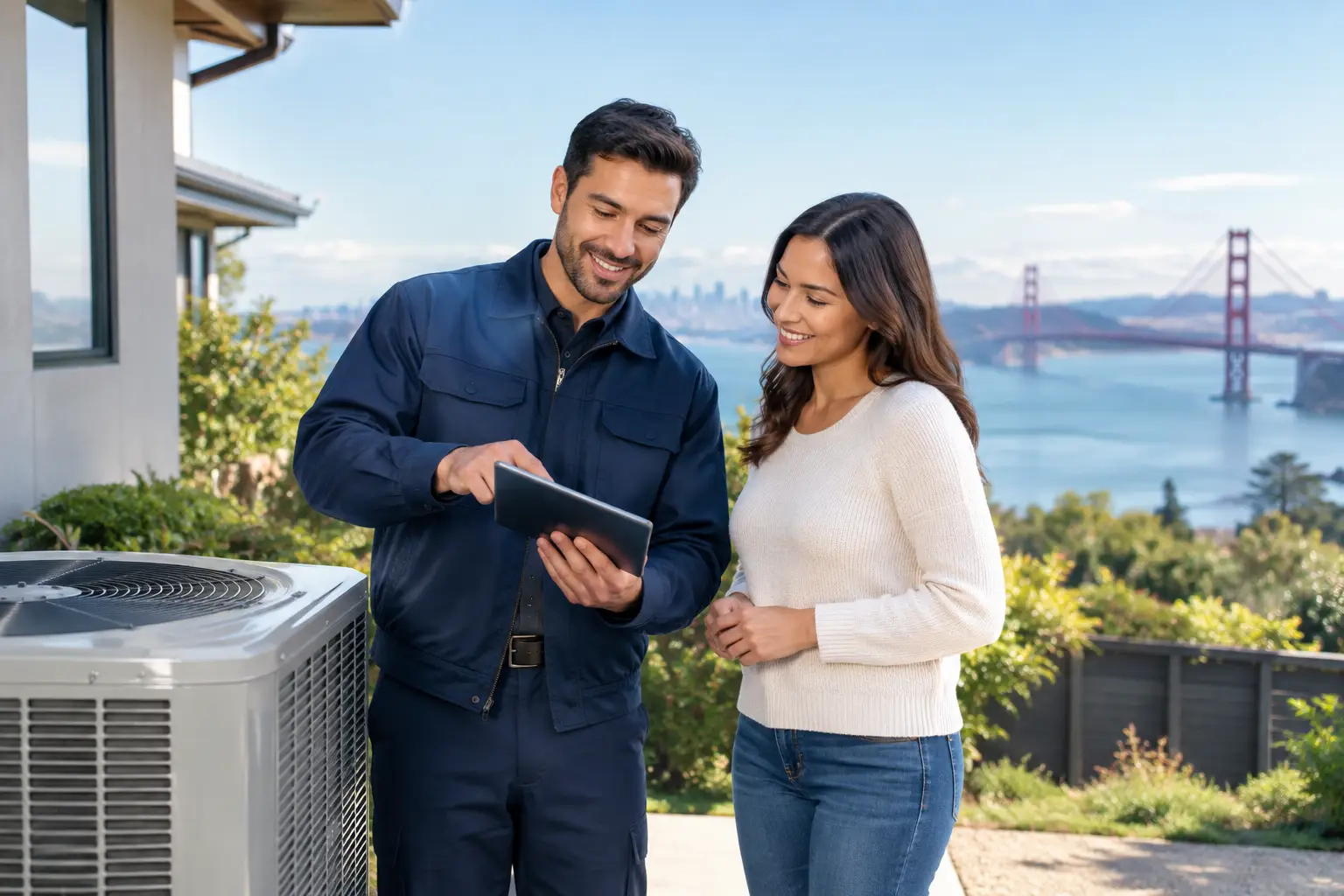
For Bay Area properties, local responsiveness also matters. Weather swings, tenant demands, and business schedules do not leave much room for delays. A dependable service partner should be able to respond quickly, provide honest recommendations, and stand behind the work. That is the standard Heating and Air Experts is built around.
How to reduce downtime after a breakdown
Once a rooftop unit goes down, every hour counts. The fastest path to recovery is having accurate information ready for the service team. If possible, note when the issue started, what zones are affected, whether the thermostat is blank or active, and whether you noticed noise, smell, water, or cycling changes before the failure. That information can shorten diagnosis time.
It also helps to keep service records for the unit, especially if there have been repeat issues. A pattern of prior repairs can reveal whether the current problem is isolated or part of a larger reliability issue. In some cases, temporary scheduling adjustments inside the building can reduce strain until the repair is completed, but those workarounds are not substitutes for service.
The bigger goal is to prevent the next emergency. After the repair, ask what caused the issue and what follow-up steps are recommended. Sometimes the answer is simple, like a neglected filter change schedule. Other times it points to aging equipment that needs a longer-term plan.
Commercial rooftop unit repair that supports long-term performance
A good repair does more than get the unit running again. It should restore safe operation, improve dependability, and give you a clearer picture of what comes next. That is especially important in commercial settings, where comfort problems can affect daily operations, customer experience, and occupancy satisfaction.
If your rooftop unit is struggling, acting unpredictably, or failing to keep up, early service is usually the smarter move. Fast diagnosis, honest guidance, and quality workmanship can make the difference between a controlled repair and a much larger interruption. The right time to address a rooftop problem is usually before it forces your schedule, your budget, and your building into emergency mode.