A small drain line can create a surprisingly large HVAC problem. When moisture cannot leave your air conditioner or high-efficiency furnace, it can back up into the drain pan, trigger a safety switch, stain ceilings, or leave water around the equipment. Knowing how to clean condensate drain lines can help you address a minor clog early, but it also helps to recognize when the issue needs a trained technician.
What a condensate drain does
Your cooling system removes humidity from indoor air as it runs. That moisture collects on the evaporator coil and drips into a pan below it. From there, a condensate drain line carries the water outside, to a plumbing drain, or to a condensate pump.
In Bay Area homes and commercial buildings, the drain line may clog with algae-like growth, dust, rust particles, or debris from the drain pan. A system that has been sitting through a mild season can develop buildup before the first stretch of hot weather. Because the line is usually out of sight, homeowners often do not notice a problem until the AC stops cooling or water appears where it should not.
A clogged drain is not always a simple cleaning issue. A cracked pan, poorly pitched drain line, failed condensate pump, frozen evaporator coil, or oversized humidity load can produce similar symptoms. That is why a careful inspection matters.
Signs your condensate drain may be clogged
The most common warning sign is water around the indoor air handler, furnace, or utility closet. You may also see a full secondary drain pan, moisture staining near a ceiling-mounted unit, or water dripping from an emergency drain pipe outside.
Other signs are less obvious. Your AC may shut off unexpectedly because a float switch has detected rising water. You might notice a musty odor when the system starts, especially if standing water has collected in the pan. In some cases, indoor humidity rises because the system is short-cycling or shutting down before it can complete a normal cooling cycle.
Do not ignore these symptoms just because the equipment starts again later. Continued overflow can damage drywall, insulation, flooring, electrical components, and nearby belongings.
Before you clean the condensate drain
Turn off power to the HVAC system at the thermostat and the appropriate breaker or service switch. The indoor unit contains electrical parts, and water near those components deserves caution. If you see significant standing water, a damaged drain pan, exposed wiring, or a ceiling stain that is spreading, stop and schedule service rather than attempting a DIY repair.
For a basic cleaning, gather a wet/dry vacuum, a small container or towels, distilled white vinegar, warm water, gloves, and a flashlight. A funnel can be useful if the drain line has an accessible cleanout cap. Avoid using compressed air at high pressure, sharp wire, or harsh chemical drain cleaners. Those methods can disconnect a fitting, damage a PVC line, harm a condensate pump, or create fumes around the HVAC equipment.
Bleach is often suggested for drain cleaning, but it is not the best choice for every system. It can be hard on certain drain components and should never be mixed with other cleaners. Vinegar is generally a gentler option for routine maintenance, though a heavily blocked line may need professional clearing.
How to clean a condensate drain line step by step
1. Locate the drain line and cleanout
Find the PVC or flexible drain line leaving the indoor unit. Many systems have a vertical vent or capped tee near the air handler. This is the cleanout access point. If your system uses a condensate pump, locate the pump reservoir as well, but do not assume the pump is the only source of the problem.
Place towels below the access point before removing the cap. If water is already backed up, opening the line may release it.
2. Check the drain pan for water and debris
Use a flashlight to inspect the primary drain pan beneath the evaporator coil. A small amount of water may be present while the system runs, but a pan that is full or overflowing points to a drainage issue. Remove loose debris you can safely reach, such as insulation fragments or visible sludge near the drain opening.
Do not bend refrigerant lines, disturb wiring, or force anything into the coil area. If the pan is rusted through or cracked, cleaning the line will not solve the leak.
3. Vacuum the outlet end of the line
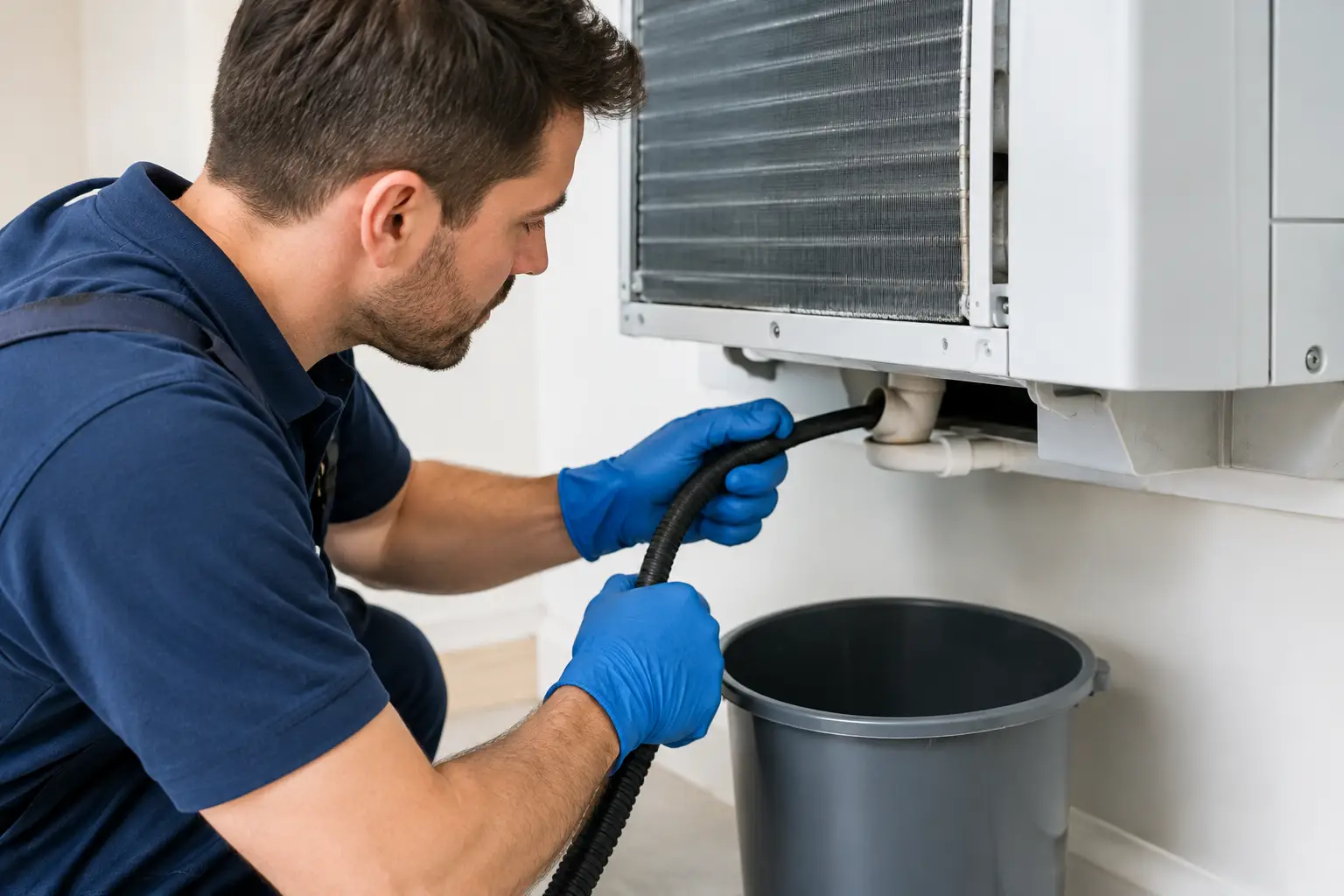
Go to the point where the condensate line exits outdoors or enters an accessible drain. Attach a wet/dry vacuum to the end of the line as securely as possible. A rag around the connection can improve the seal. Run the vacuum for one to two minutes to pull out water and buildup.
This is often safer and more effective than pushing material deeper into the pipe from inside. If the line drains into a plumbing connection, do not disassemble plumbing components unless you know the drain configuration and local requirements.
4. Flush the line from the cleanout
Return to the indoor cleanout. Slowly pour about one cup of distilled white vinegar into the drain line, then let it sit for roughly 20 to 30 minutes. Follow with warm water, poured slowly enough that you can watch for backup.
If the water flows freely and you can see it reaching the outlet, the immediate blockage may be cleared. Replace the cleanout cap securely. An open or improperly capped cleanout can affect drainage on systems designed with a vented trap.
5. Test the system and watch for proper drainage
Restore power and run the cooling system long enough to produce condensation. Check the drain outlet and the area around the indoor unit. The line should drain without leaking, gurgling excessively, or filling the pan.
If the system immediately shuts off again, water continues to rise, or the drain line will not accept a gentle flush, stop there. The clog may be farther down the line, or another mechanical problem may be involved.
When a condensate pump is part of the problem
Some air handlers, attic systems, basements, and commercial installations use a condensate pump because gravity cannot carry water to a drain. A pump reservoir can collect sludge, while the pump float or discharge tubing can fail.
Unplug the pump before inspecting it. If you are comfortable doing so, clean accessible residue from the reservoir according to the manufacturer instructions and check that the discharge tube is not kinked. However, a pump that hums without moving water, leaks from its housing, trips a safety switch, or repeatedly fails should be repaired or replaced by an HVAC professional.
Commercial systems can have more complex condensate routing, multiple units, drain traps, and code-related considerations. Property managers should avoid treating recurring drain problems as a housekeeping task. Repeated clogs can signal a design, maintenance, or equipment performance issue that needs a proper diagnosis.
How often should you clean the drain line?
For many homes, checking and flushing the condensate drain once or twice a year is reasonable. Spring is a smart time to do it before cooling season, while a second check can help in homes with long AC run times, pets, dusty conditions, or high indoor humidity.
The right interval depends on the system. A rarely used air conditioner may still develop buildup, while a heavily used system may need more frequent attention. If your drain has clogged more than once, routine vinegar flushing alone is unlikely to be the full answer. The technician should inspect the drain slope, trap configuration, coil condition, pan, pump, float switch, and overall system operation.
Know when to call for HVAC service
Call for professional help if water is leaking from the ceiling, the drain pan is damaged, the evaporator coil is frozen, or a safety switch repeatedly shuts the system down. You should also schedule service when the drain line clogs soon after cleaning, since that may indicate a deeper restriction or an underlying airflow issue.
Heating and Air Experts provides practical diagnostics for homeowners, property managers, and businesses throughout the Bay Area. Certified technicians can clear the drainage path, identify the reason it clogged, and help protect your equipment and property from repeat water damage.
A clean condensate drain is a small maintenance detail, but it protects some of the most important parts of your HVAC system. Acting at the first sign of moisture can keep a manageable service visit from becoming a much larger repair.