A furnace decision often comes up at the least convenient time: the current unit has failed, the building feels unevenly heated, or repair costs are starting to pile up. When comparing a gas furnace versus electric furnace, the right answer depends on your utility access, operating costs, building layout, and how long you expect to keep the property. For Bay Area homeowners, property managers, and business owners, a clear comparison can prevent a rushed replacement decision.
The Main Difference Between Gas and Electric Furnaces
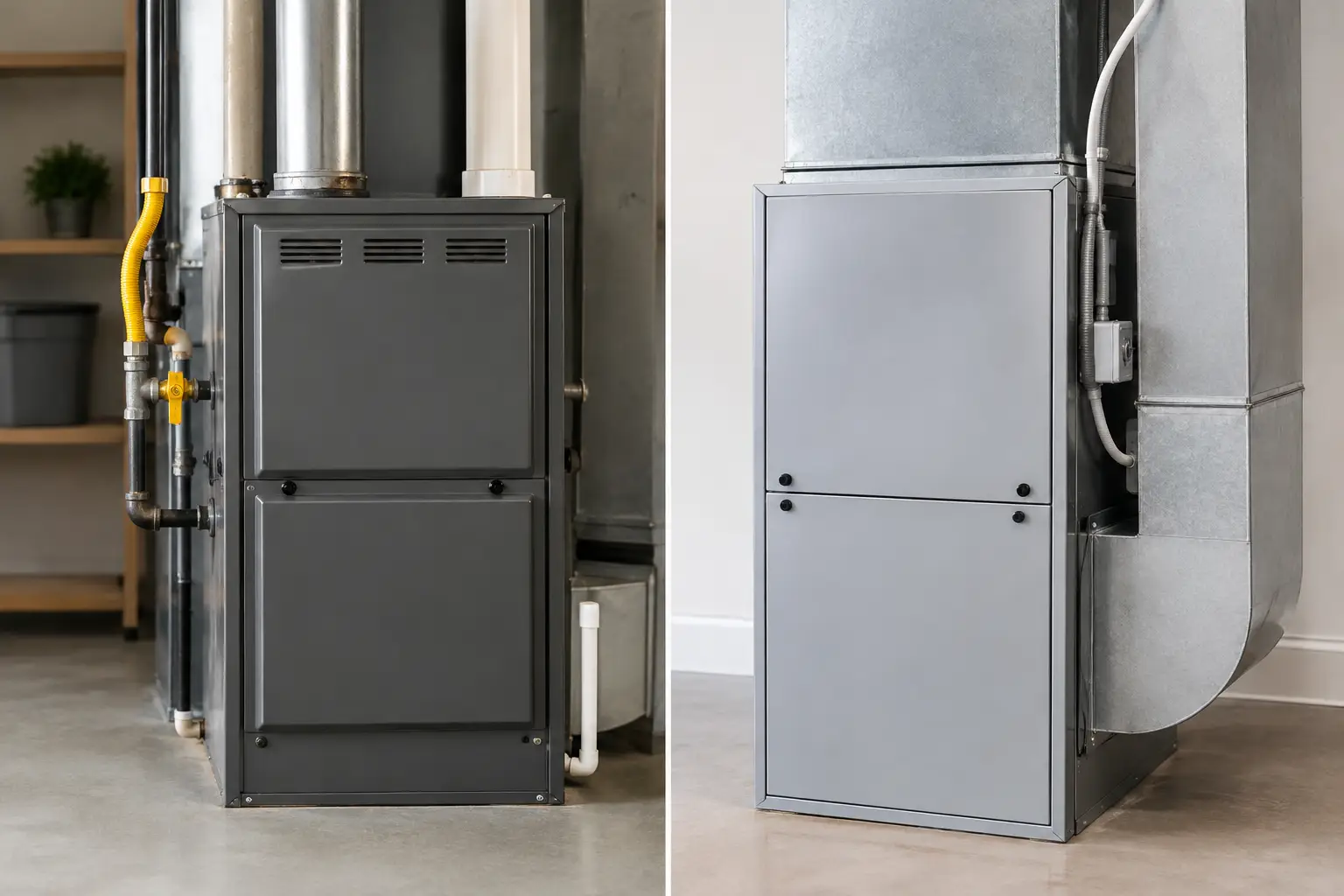
A gas furnace burns natural gas or propane to create heat. A heat exchanger transfers that heat to the air, and a blower distributes the warmed air through the ductwork. Because combustion is involved, gas furnaces require a properly installed venting system, a gas connection, and regular safety checks.
An electric furnace creates heat by passing electricity through heating elements, much like a larger and more powerful version of a space heater. The air handler pushes air across the elements and through the ducts. There is no combustion, no flue pipe, and no risk of carbon monoxide created by the furnace itself.
Both systems can provide dependable central heat. The decision is less about which technology is universally better and more about which one fits the property and its utility costs.
Gas Furnace Versus Electric Furnace: Upfront Cost
In many homes, an electric furnace costs less to purchase and install than a comparable gas furnace. The equipment is generally simpler, and installation does not require a gas line or combustion venting if the building is not already set up for it. That can make electric heat appealing for smaller spaces, additions, or properties where gas service is unavailable.
A gas furnace may carry a higher initial installation cost, especially when new gas piping, venting, or code updates are necessary. If your existing system already has a gas line and proper venting in place, however, replacing an older gas furnace can be straightforward. The actual price still depends on furnace capacity, efficiency rating, duct condition, electrical work, permit requirements, and access to the equipment location.
The lowest installation estimate is not always the best value. An incorrectly sized furnace can short cycle, leave rooms uncomfortable, increase wear on components, and waste energy. A professional load calculation should guide the recommendation rather than the size of the old unit alone.
Operating Costs Can Change the Equation
Electric furnaces are highly efficient at the point of use. Nearly all the electricity supplied to the unit becomes heat inside the building. That sounds ideal, but electricity rates in much of the Bay Area can make electric resistance heat expensive to operate during colder periods.
Gas furnaces lose some energy through combustion and venting, even high-efficiency models. Yet natural gas has often been less expensive per unit of heat than electricity, so many Bay Area properties see lower winter operating costs with gas heat. Utility pricing, rate plans, local climate, insulation levels, and thermostat habits all affect the result.
This is where a simple efficiency percentage can be misleading. A 100% electric furnace does not automatically cost less to run than a 95% gas furnace. The practical question is how much you will pay for the heat delivered to your particular building.
For an accurate comparison, ask for estimated seasonal operating costs based on the system size and your local utility rates. Property managers should also consider how heating costs are billed. A system that is economical for an owner may not be the same choice for a tenant-paid utility arrangement.
Comfort and Heating Performance
Gas furnaces usually produce hotter supply air than electric furnaces. Many people notice that gas heat feels warmer shortly after the system starts, particularly in a drafty older home or a commercial space with frequent door traffic. Gas systems also tend to recover indoor temperature quickly after a cold night.
Electric furnaces provide steady, dependable heat, but the air leaving the vents may feel less hot. In a well-insulated home with balanced ductwork, that difference may not matter much. In a poorly insulated building, slower recovery can become more noticeable and can increase electric consumption.
Neither furnace can overcome problems outside the equipment itself. Leaking ducts, clogged filters, undersized return vents, failing blower motors, and poor thermostat placement can all cause cold rooms and weak airflow. Before replacing a furnace solely because comfort is uneven, have the full system evaluated.
Safety, Maintenance, and Reliability
Electric furnaces have fewer combustion-related components. They do not need a heat exchanger, burner assembly, gas valve, or flue system. This can mean fewer safety concerns and a simpler maintenance profile. Electrical connections, heating elements, sequencers, filters, and blower components still need inspection, especially in systems that run heavily.
Gas furnaces are safe when installed and maintained correctly, but they require more attention. A cracked heat exchanger, blocked vent, improper combustion, or gas leak can create serious concerns. Annual professional maintenance helps identify worn parts, verify safe operation, inspect the venting system, and test for carbon monoxide issues before they become emergencies.
For either choice, reliable operation starts with routine service. Replacing filters on schedule, keeping supply and return vents open, and addressing unusual noises or frequent cycling early can prevent avoidable breakdowns.
Installation Requirements Matter More Than Many Owners Expect
A building with no existing gas service may face substantial work to install a gas furnace. The project can involve utility coordination, gas piping, venting routes, electrical updates, permits, and space planning. In some cases, the installation cost makes electric heat more practical even if gas would cost less to operate.
On the other hand, an electric furnace can place a significant load on the electrical panel. Older homes and commercial buildings may need panel upgrades or dedicated circuits. This should be assessed before choosing electric resistance heat, not after the equipment has been selected.
Local and state regulations also continue to influence heating decisions. Requirements can vary by city, building type, and project scope. A qualified HVAC contractor can explain what applies to your replacement or new installation without pushing a one-size-fits-all answer.
When a Gas Furnace Is Often the Better Fit
A gas furnace may make sense when the property already has natural gas service, the building needs strong heating output, and winter energy costs are a major concern. It is often a practical choice for larger homes, older buildings with greater heat loss, and commercial spaces that need faster temperature recovery.
It can also be a sensible replacement when an existing gas furnace has reached the end of its service life and the ductwork, venting, and fuel connection are in good condition. In that situation, upgrading to a properly sized high-efficiency model may improve comfort without requiring major changes to the building.
When an Electric Furnace Is Often the Better Fit
An electric furnace can be a good fit for buildings without gas service, spaces with modest heating demand, or projects where avoiding combustion equipment is a priority. It may also be appropriate when the electrical infrastructure is already sufficient and the owner prefers a simpler installation.
However, electric resistance heat should not be confused with a heat pump. A heat pump uses electricity too, but it moves heat rather than generating all of it through resistance elements. In the Bay Area’s generally mild climate, a heat pump may offer lower heating costs than an electric furnace and can provide air conditioning in the same system. It is worth asking about this option when replacing both heating and cooling equipment.
Get a Recommendation Based on Your Building
The best furnace choice should account for more than the equipment label. A dependable recommendation includes the building’s heat load, insulation, ductwork, electrical capacity, fuel availability, maintenance expectations, and projected ownership timeline. It should also include transparent pricing for the work required to install the system correctly.
Heating and Air Experts can inspect your current equipment, explain the trade-offs in plain language, and recommend a solution that supports reliable comfort rather than a quick sale. If your furnace is aging, making unusual noises, cycling frequently, or leaving parts of the building cold, scheduling an evaluation before a complete failure gives you more control over the decision.