A furnace rarely quits at a convenient time. It usually starts with little problems – longer heating cycles, uneven room temperatures, odd noises, or a utility bill that suddenly looks wrong. If you are asking when replace home furnace equipment, the answer is usually not based on one issue alone. It comes down to age, repair history, performance, safety, and whether the system is still worth putting money into.
For Bay Area homeowners and property managers, that decision can feel especially frustrating. Winters may be milder than in colder parts of the country, but when your heat is unreliable, comfort drops fast. The right call is not always immediate replacement, and it is not always another repair either. Honest guidance starts with understanding what your furnace is telling you.
When replace home furnace systems makes sense
Most furnaces last about 15 to 20 years with proper maintenance. Some fail earlier due to neglected service, installation issues, dirty ductwork, airflow restrictions, or heavy use. Others can limp past 20 years, but that does not always mean they should.
If your furnace is in that age range and showing multiple problems, replacement often becomes the smarter long-term choice. An older system may still turn on, but it can run less efficiently, heat less evenly, and break down more often. That means you keep paying to maintain equipment that is already near the end of its useful life.
Age alone should not force the decision. A well-maintained 12-year-old furnace with a minor repair need is very different from an 18-year-old unit with repeated ignition problems and a failing blower motor. The real question is whether the next repair meaningfully extends the life of the system or just delays a larger expense.
The clearest signs your furnace may need replacement
Some furnace issues are repairable and routine. A bad ignitor, dirty flame sensor, clogged filter, or thermostat problem can often be fixed without major cost. Other signs point toward a system that is wearing out as a whole.
One of the biggest red flags is rising repair frequency. If you have had more than one major service call in the last couple of years, your furnace may be entering a costly cycle. Replacing one component can make sense. Replacing several expensive parts on an aging unit usually does not.
Another common sign is uneven heating. If one room feels fine while another stays cold, the problem may be duct-related, but it can also mean your furnace is struggling to distribute heat properly. Weak airflow, short cycling, and long run times often show up together when the system can no longer perform the way it should.
High energy bills also matter. Older furnaces generally run at lower efficiency than newer models, and performance tends to decline over time. If your winter heating costs keep climbing while your comfort gets worse, the system may be working harder to deliver less.
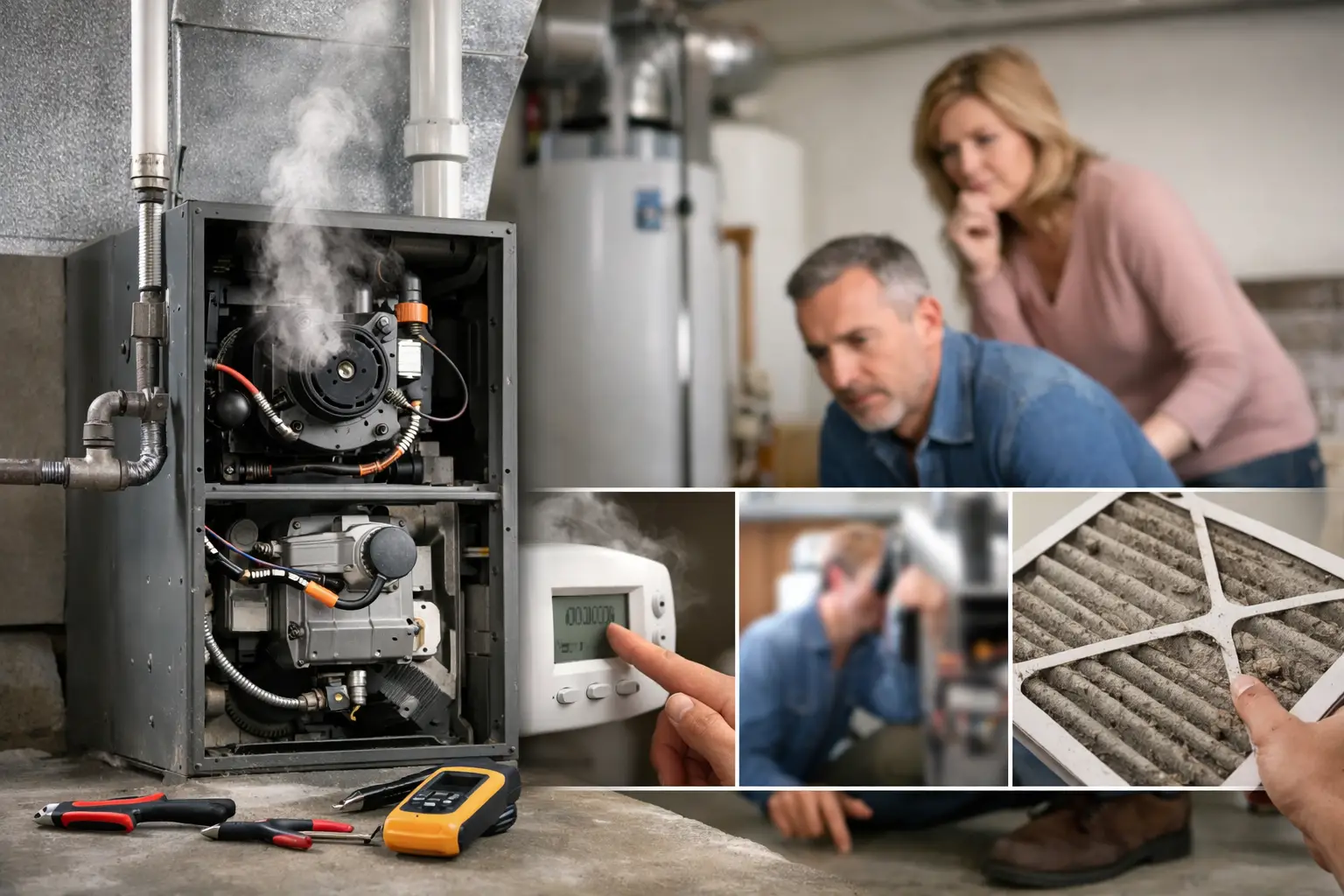
Then there are the warning signs you should not ignore at all: burning smells that persist, visible rust or cracks, rattling or banging noises, soot around the furnace, or signs of poor combustion. Any concern involving gas, combustion, or carbon monoxide risk should be checked right away by a qualified technician.
Repair or replace? The answer depends on cost and timing
This is where many property owners want a simple rule. In real life, it depends.
If your furnace is relatively new and the repair is straightforward, repairing it is usually the right move. If the unit is older and the repair is expensive, replacement often provides better value. Many homeowners use a version of the repair-versus-replace test by looking at the unit age and the repair cost together. While there is no perfect formula, a major repair on a furnace nearing 15 to 20 years old should trigger a serious replacement discussion.
Timing matters too. Waiting until total failure can limit your options, especially during a cold spell or emergency call. Replacing a furnace before it completely stops working gives you more time to compare efficiency levels, evaluate your home’s heating load, and plan installation around your schedule rather than a breakdown.
There is also a comfort factor people sometimes overlook. A furnace that technically still works but leaves your home drafty, noisy, dusty, or inconsistent is not delivering what you need. Replacement is not only about avoiding future repairs. It can also improve daily comfort, indoor air quality support, and system control.
How efficiency changes the decision
Older furnaces can be much less efficient than modern systems. That does not mean every new unit pays for itself overnight, but it does mean efficiency should be part of the conversation.
If your current furnace has a low efficiency rating and your heating bills are rising, a replacement may reduce operating costs while improving reliability. Newer systems also tend to offer quieter operation, better airflow management, and improved compatibility with modern thermostats.
That said, the best upgrade is not always the most expensive model. The right furnace for your property depends on square footage, insulation, duct condition, occupancy patterns, and how the system is sized. Oversized or undersized equipment can create comfort and efficiency issues even if the unit itself is brand new. That is why a proper evaluation matters more than a quick quote based only on the old unit’s label.
Bay Area conditions can affect furnace life
In the Bay Area, furnace systems often face a different pattern of use than in colder regions. They may run seasonally rather than constantly, which can help extend lifespan in some homes. On the other hand, because heating is used less aggressively, some issues go unnoticed until the first colder stretch of the year. A furnace can appear fine for months and then show ignition, airflow, or thermostat problems as soon as regular heating demand returns.
Coastal conditions, dust buildup, older duct systems, and long periods without maintenance can all impact performance. In properties with poor insulation or aging vents, homeowners sometimes assume the furnace itself is the only issue when the real problem is broader system inefficiency. That is another reason a full inspection is more useful than guessing based on one symptom.
What a professional inspection should tell you
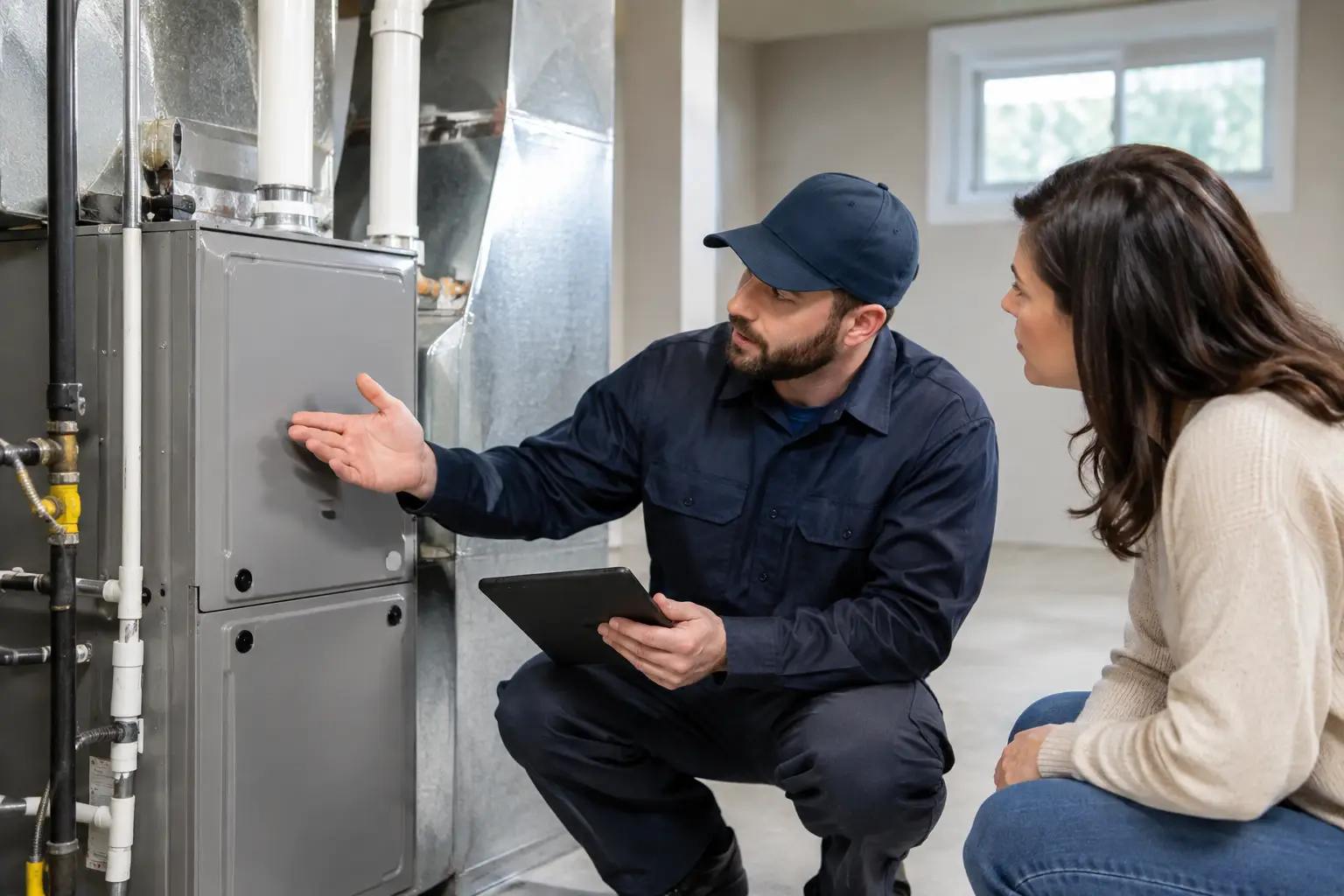
A good furnace evaluation should be clear and practical. You should know the system’s approximate remaining life, what repairs are needed now, what issues may follow soon, and whether replacement is a recommendation or a necessity.
Trusted HVAC professionals do not push replacement when a safe, cost-effective repair will do the job. They also should not downplay serious wear just to keep a short-term repair cheap. The goal is honest guidance so you can make a decision with confidence.
At Heating and Air Experts, that means looking beyond the immediate complaint. If your furnace is noisy, the inspection should also address airflow, filter condition, thermostat operation, safety controls, and visible wear. If replacement is the better path, you should receive upfront pricing and a clear explanation of what you are gaining in comfort, efficiency, and reliability.
Signs it is better not to wait
There are moments when delaying replacement usually costs more than acting sooner. One is when the heat exchanger or another major safety-related component is compromised. Another is when repair parts are difficult to source for an older unit. Repeated no-heat calls, especially during colder weather, are also a strong sign the system is no longer dependable enough for daily use.
For landlords and property managers, reliability matters even more. A furnace that fails in occupied space creates tenant frustration, emergency service costs, and scheduling pressure. Planning replacement before a hard failure is often the cleaner and less disruptive choice.
Homeowners preparing to sell can face a different calculation. If the furnace is very old but still running, a pre-sale replacement may or may not be necessary. It depends on inspection risk, buyer expectations, and the likelihood of repair negotiations. In many cases, knowing the true condition of the system helps you decide whether to replace it, service it, or price the home accordingly.
The smartest time to ask when replace home furnace equipment
The best time to ask is before your system leaves you without heat. If your furnace is aging, underperforming, or needing more frequent service, a professional assessment can save you from an emergency decision. You do not need to wait for total failure to find out where you stand.
A dependable furnace should heat your space evenly, operate safely, and do its job without constant repairs or rising stress. If yours is no longer meeting that standard, getting clear answers now is often the most practical step you can take for your comfort, budget, and peace of mind.