That first 95-degree afternoon always tells the truth about your air conditioner. One minute the house feels fine, the next you’re standing in front of a vent that’s pushing out lukewarm air while the unit hums like nothing’s wrong. If you’ve ever searched “AC repair near me” at 4 p.m. on a Fremont summer day, the team at Heating and Air Experts knows exactly the kind of panic that drives that search and this guide is here to replace that panic with a clear understanding of what’s actually happening, what it costs, and how to fix it the right way.
This isn’t a sales pitch. It’s the explanation I wish more homeowners had before a repair, written from the perspective of people who’ve opened up thousands of failing units across the Bay Area.
Why AC Repair Matters More Than Most Fremont Homeowners Expect
There’s a comfortable myth floating around the East Bay: that Fremont’s mild, Mediterranean climate makes air conditioning a luxury rather than a necessity. The coastal breeze keeps summer highs sitting around 75 to 82 degrees most days, so people assume their AC barely works hard enough to break.
Then late summer arrives. For a stretch of days from May into early October, inland heat pushes Fremont temperatures into the mid-90s and occasionally past 100. Your AC, which loafed along for months, suddenly runs for hours straight. That sudden demand is exactly when weak parts give out.
The Bay Area Climate Trap
Here’s the part homeowners miss. An air conditioner that AC Repair Near Me Services in Fremont, CA hard isn’t a healthy one — it’s an untested one. A small refrigerant leak or a tired capacitor can sit hidden for an entire mild season because the system never strains enough to expose the fault.
So the failure doesn’t feel gradual. It feels like a betrayal. The unit was “fine” yesterday because yesterday only asked it to do half a job. Fremont’s climate basically lets problems hide until the worst possible afternoon.
What Waiting Actually Costs You
Delay is the most expensive choice in HVAC. A struggling system doesn’t fail politely; it drags other components down with it.
Picture a low refrigerant charge. The compressor the single priciest part in the whole system works overtime to compensate, overheats, and shortens its life. A $250 leak repair ignored for a season can snowball into a $1,800 compressor replacement. I’ve watched it happen more times than I can count, and the homeowner almost always says the same thing: “It was just blowing a little warm.”
A small problem caught early stays small. That’s the entire argument for treating “AC repair near me” as a same-week task, not a someday task.
The Warning Signs Your Fremont AC Is Asking for Help
Air conditioners are surprisingly honest. They tell you they’re sick long before they quit — most people just don’t speak the language. Once you learn the signals, you can call for repair while the fix is still cheap.
Warm Air, Weak Airflow, and Short Cycling
The most obvious sign is also the most ignored: air that isn’t cold. If your vents push room-temperature air while the thermostat insists it’s cooling, the problem usually traces back to refrigerant, a frozen coil, or a failing compressor.
Weak airflow points somewhere else entirely often a clogged filter, a dirty blower, or a duct issue. And then there’s short cycling, where the system clicks on and off every few minutes without ever satisfying the thermostat. That rapid stop-start pattern strains the motor and almost always signals an electrical or sizing problem worth a professional look.
Strange Sounds, Odd Smells, and Climbing Bills
A healthy AC produces a steady, boring hum. Grinding, screeching, or rhythmic clicking is the sound of metal parts meeting parts they shouldn’t. Buzzing frequently means an electrical component often a relay or capacitor is on its way out.
Smells matter too. A musty odor suggests mold growing on a damp coil, while a sharp, burning scent demands you shut the system off immediately and call someone. Then watch your utility bill. A cooling system that suddenly costs 30% more to run hasn’t changed its habits it’s working harder to deliver the same comfort, and that extra effort is your money leaking out through a fault somewhere.
What Actually Breaks Inside an Air Conditioner
Understanding the guts of your system turns a scary repair quote into an informed decision. You don’t need to be a technician, but knowing what these parts do helps you ask sharper questions and spot when an estimate doesn’t add up.
Refrigerant Leaks and Compressor Failure
Refrigerant is the lifeblood of cooling. It absorbs heat indoors and dumps it outside, cycling endlessly through your coils. Contrary to popular belief, your system doesn’t “use up” refrigerant the way a car burns gas — if the level drops, you have a leak, full stop.
Topping it off without finding the leak is throwing money into a hole in the ground. A proper repair locates the leak, seals it, then recharges to the manufacturer’s exact specification.
The compressor, meanwhile, is the heart that pumps that refrigerant. When it fails, you’re looking at the most significant repair on the menu. Older Fremont homes still running R-22 refrigerant face an extra wrinkle here: that refrigerant has been phased out under EPA rules, making it scarce and pricey, which often tips the math toward replacement rather than repair.
Electrical Faults and Worn-Out Parts
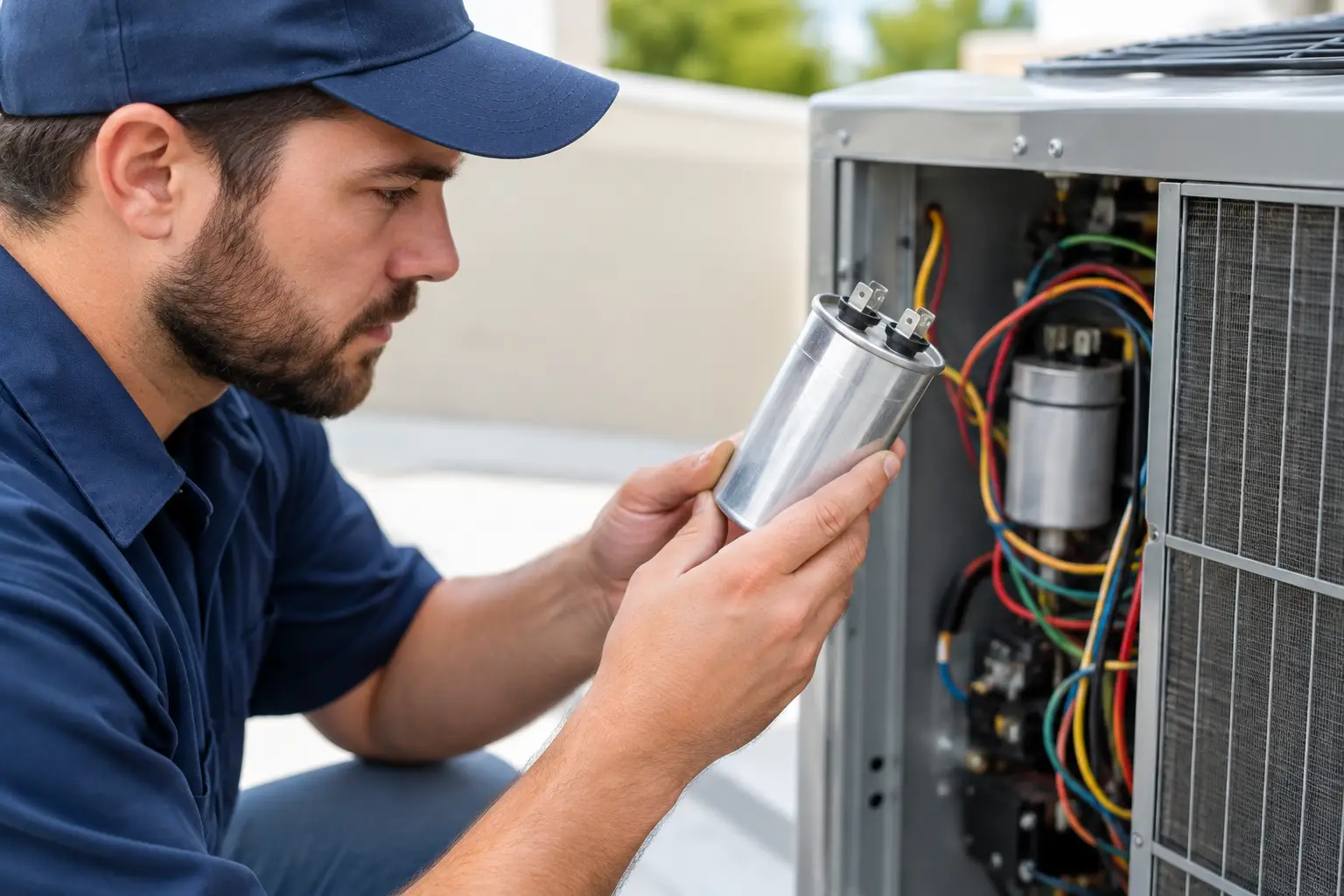
Most “my AC won’t turn on” calls trace back to something unglamorous and affordable. Capacitors store the jolt of energy needed to start the motors, and they wear out predictably, especially after hard summer use. A failed capacitor is a common, quick, inexpensive fix.
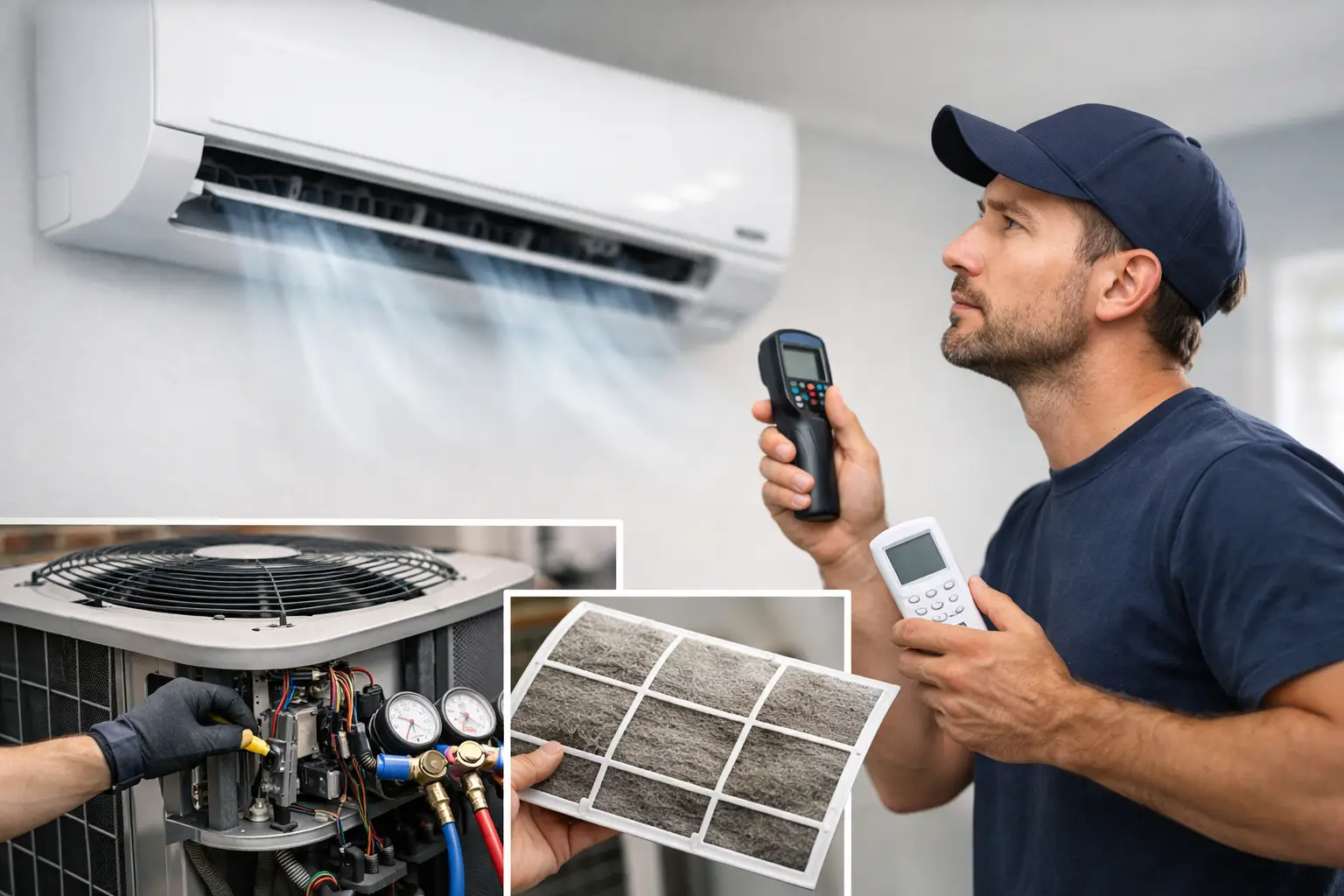
Contactors, relays, and the control board round out the usual suspects. Outside, the condenser coil collects dust, cottonwood fluff, and yard debris until it can’t shed heat properly. Inside, the evaporator coil can freeze into a solid block of ice when airflow drops or refrigerant runs low.
Repair or Replace? A Straight Comparison
When a quote climbs past a few hundred dollars, the repair-versus-replace question gets real. Here’s the framework professionals actually use:
| Situation | Lean Toward Repair | Lean Toward Replacement |
| System age | Under 10 years | Over 12–15 years |
| Repair cost | Less than 1/3 of a new unit | Approaching half a new unit |
| Refrigerant type | Modern R-410A | Obsolete R-22 |
| Breakdown frequency | First real issue | Third call this year |
| Energy bills | Stable | Climbing every season |
A useful rule of thumb many technicians follow is the “$5,000 rule” — multiply the repair cost by the system’s age, and if the result clears $5,000, replacement usually wins. A $400 repair on a 13-year-old unit ($5,200) tilts toward a new system. The same repair on a 4-year-old unit doesn’t.
How a Professional AC Repair Actually Unfolds
A lot of the fear around calling for repair comes from professional AC Repair Near Me Services not knowing what you’re paying for. Good service follows a clear, logical arc, and understanding it helps you tell a thorough company from a sloppy one.
Diagnosis and an Honest Estimate
Every legitimate repair starts with a real diagnosis, not a guess from the driveway. A technician measures refrigerant pressures, tests electrical components with a multimeter, inspects both coils, and checks airflow across the system.
This is where trust gets built or broken. A reputable company explains what failed and why, shows you the bad part where possible, and quotes the fix before touching a wrench. If someone wants to replace your whole system after a five-minute look without testing anything, that’s your cue to get a second opinion.
The Repair and the Verification
Once you approve the work, the actual fix is often faster than people expect. Swapping a capacitor takes minutes. Clearing a clogged drain line or cleaning a coil takes a bit longer. Finding and sealing a refrigerant leak, then recharging the system, is the more involved job.
The step that separates great work from mediocre work comes last: verification. After the repair, a careful technician runs the system and re-measures everything — temperatures, pressures, airflow — to confirm the fix actually solved the problem rather than masking it. Skipping that step is how callbacks happen.
Choosing the Right AC Repair Company Near You
Searching “AC repair near me” in Fremont returns dozens of options, and they are not created equal. The cheapest quote frequently becomes the most expensive choice once you factor in callbacks and shortcuts.
Licensing, Experience, and Real Reviews
Start with the basics that protect you legally and financially. In California, HVAC contractors must hold a C-20 license from the Contractors State License Board, and they should carry liability insurance. Verify both before anyone climbs onto your roof or opens your electrical panel.
Experience in the Bay Area specifically matters more than people realize. A technician who understands Fremont’s housing stock — the older Niles and Centerville homes, the newer developments near the lake — and who knows California’s Title 24 energy code will diagnose faster and recommend code-compliant fixes. Read reviews for patterns, not single complaints. Consistent mentions of clear pricing, on-time arrival, and clean work tell you far more than a star rating alone.
Watching for Red Flags
Pressure tactics are the loudest warning sign. A company that manufactures urgency — insisting you must replace everything today — is selling fear, not service. So is a refusal to put estimates in writing, or vague answers about what a part actually does.
Strong companies welcome your questions. They’d rather spend ten minutes explaining a capacitor than lose your trust over a $200 part. That patience is itself a quality signal.
Keeping Repairs Rare: The Maintenance Habit
The best repair is the one you never need. This is where industry data backs up plain common sense, and it’s the single most underused tool Fremont homeowners have.
Both the U.S. Department of Energy and ENERGY STAR recommend professional maintenance once a year, ideally in spring before cooling season. A tune-up catches the small stuff — the slightly low charge, the weakening capacitor, the dirty coil — while it’s still cheap and before that first 95-degree day puts the system under load.
Between visits, the homeowner’s job is simple and genuinely powerful: change the air filter every one to three months. A clogged filter chokes airflow, freezes coils, and overworks the blower, and it’s responsible for a startling share of “emergency” calls that a $15 filter would have prevented.
There’s an efficiency angle too. The DOE updates national HVAC efficiency standards roughly every six years, and as of 2023, new central air conditioners installed in California must meet a minimum 14.3 SEER2 rating (the Southwest region requirement set with input from AHRI). A well-maintained system not only breaks down less it holds onto the efficiency you paid for, keeping summer bills in check.
Conclusion
Air conditioning in Fremont lives in a strange middle ground. It’s not the everyday workhorse it is in Phoenix, but those few brutal weeks each year demand a system that’s ready when called. The homeowners who stay comfortable and spend the least are the ones who act on small signs early, schedule a yearly tune-up, and build a relationship with one trustworthy local company before an emergency forces a rushed decision.
So the next time the air feels a little off, don’t wait for it to quit on the hottest afternoon of the year. Catch it early, ask good questions, and insist on a real diagnosis. Your wallet and your comfort during that next heat spike will thank you.
Frequently Asked Questions
How much does AC repair in Fremont, CA typically cost?
Most common repairs land between roughly $150 and $600, covering things like capacitors, contactors, or a clogged drain line. Refrigerant leak repairs and recharges run higher, and a full compressor replacement is the priciest job. Always get a written diagnosis and estimate first.
How quickly can I get same-day or emergency AC repair near me?
Many Fremont HVAC companies offer same-day and emergency service during peak summer, though demand spikes on the hottest days. Calling early in the morning gives you the best shot at a same-day slot before schedules fill.
Is it worth repairing an AC unit that’s over 10 years old?
It depends on the repair cost and refrigerant type. If the fix is minor and the system uses modern R-410A, repair makes sense. If repairs are climbing, the unit is past 12 to 15 years, or it still runs a phased-out R-22, replacement is usually the smarter long-term move.
Why is my AC running but not cooling the house?
The usual culprits are low refrigerant from a leak, a frozen evaporator coil, a dirty condenser coil, or a failing compressor. A technician needs to measure pressures and inspect the coils to pinpoint which one — guessing here wastes money.
How often should I service my air conditioner?
Once a year, ideally in spring before cooling season, as recommended by the Department of Energy and ENERGY STAR. Between professional visits, change your air filter every one to three months to protect airflow and prevent avoidable breakdowns.