Most people never think about the air moving through their home until something feels off — a stale smell when the system kicks on, dust that returns two days after cleaning, or a family member sneezing more than usual indoors. That hidden network of ducts behind your walls quietly shapes the air you breathe every single day. At Heating and Air Experts, we’ve crawled through enough Danville attics and opened enough return vents to tell you exactly what’s worth your money and what isn’t — and this guide pulls back the curtain on the whole thing.
Air vent cleaning gets talked about a lot, and not all of it is accurate. Some companies oversell it. A few homeowners ignore it entirely. The truth sits comfortably in the middle, and that’s where this article lives. We’ll walk through what professional vent cleaning actually does, when your home genuinely needs it, and how to choose a service in the Danville area without getting upsold on things you don’t need.
Why Air Vent Cleaning Deserves Attention in a Place Like Danville
Danville isn’t a dusty desert town, but its setting creates real conditions worth understanding. The community sits in the San Ramon Valley, tucked against rolling hills and open space, and that proximity to dry grassland, wind-carried pollen, and seasonal wildfire smoke means more airborne particulate than many homeowners expect. Every time your HVAC system runs, it pulls that air through filters and pushes it across your ductwork.
What Actually Builds Up Inside Your Ducts
Over months and years, fine dust settles along the inner walls of your vents. Pet dander joins it. So do skin cells, fabric fibers, pollen tracked in from the yard, and the occasional insect that found its way inside. In homes near the hills, we regularly find a surprising amount of fine grit that drifts in during dry, windy stretches.
None of this is alarming on its own. A modest layer of dust in a duct is normal and harmless. The conversation changes when buildup becomes heavy enough to shed back into your living space, or when moisture enters the picture.
The Moisture Problem People Underestimate
Here’s where it gets serious. Ducts that experience condensation — often from an aging or poorly insulated system — can develop mold. The EPA has been clear on this point for years: if you can see mold growth inside hard ductwork or on other HVAC components, cleaning and addressing the moisture source is genuinely warranted. That’s not marketing; that’s a health-and-building issue.
We’ve opened return plenums in Home Air Vent Cleaning Services in Danville, CA and found exactly this. In those cases, vent cleaning isn’t a luxury — it’s the responsible fix, paired with solving whatever let the moisture in.
What Professional Air Vent Cleaning Actually Involves
A lot of homeowners imagine someone sticking a shop vacuum into a register and calling it done. Real, professional cleaning looks nothing like that, and the difference shows in the results.
The Inspection Comes First
Any technician worth hiring starts by looking before touching. A proper assessment means examining the supply and return registers, checking the condition of the ductwork itself, and inspecting the components your air passes over — the blower, the coils, the drain pan. This step tells the technician whether you even need a full cleaning, and it gives you an honest baseline rather than a one-size-fits-all sales pitch.
At Heating and Air Experts, we treat this inspection as the moment to be straight with the customer. If your ducts are clean enough, we say so. That honesty costs us a job today and earns us a reputation that lasts.
The Cleaning Process, Step by Step
When cleaning is justified, the industry-standard method follows a recognizable rhythm that NADCA-aligned professionals use across the country.
Step One: Containment and Negative Pressure
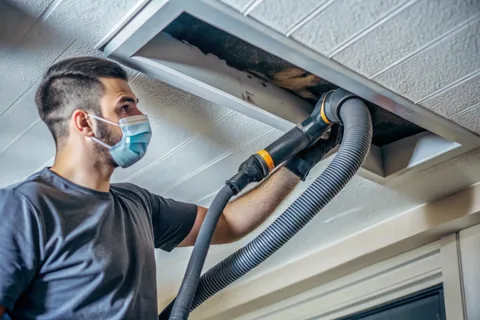
The technician connects a powerful, truck-mounted or high-capacity portable vacuum to your duct system. This creates negative pressure, meaning loosened debris flows toward the vacuum instead of scattering into your rooms. Without this step, you’re just relocating dust around your home.
Step Two: Agitation
Brushes, compressed-air whips, or specialized agitation tools dislodge the material clinging to the duct walls. Different ducts call for different tools — flexible ductwork needs a gentler touch than rigid sheet metal, and a careless technician can damage flex duct that costs real money to replace.
Step Three: Component Cleaning
Beyond the ducts themselves, a thorough service addresses the registers, the grilles, and accessible parts of the air handler. Skipping these leaves obvious dirt right where you’ll see it.
Step Four: Verification
A good crew shows you the before-and-after. Photos, a visual walk-through, sometimes camera footage from inside the ducts. You should never have to take it on faith.
How to Tell When Your Danville Home Genuinely Needs This Service
Now to the question everyone actually wants answered: should you book a cleaning, or are you fine? A few honest signals point toward yes.
You notice visible dust puffing from the registers when the system starts. You spot debris or even mold around the vent covers. Your home smells musty when the air conditioning or heat runs, and the smell doesn’t trace back to anything obvious. Someone in the household deals with allergies or asthma that worsens indoors. You recently finished a remodel and fine construction dust traveled everywhere. Or you bought the home and have no idea when — or whether — the ducts were ever serviced.
Any one of those is reason enough to schedule an inspection. None of them mean you absolutely must clean immediately, which brings us to a point too many companies skip.
A Word of Honesty the Industry Often Skips
The EPA does not recommend routine duct cleaning for its own sake, and we won’t pretend otherwise. Their position is measured: clean when there’s a demonstrated reason — mold, vermin, or substantial debris being released into the home — rather than on a rigid schedule simply because time passed.
That nuance is exactly what separates a trustworthy contractor from one chasing your wallet. Vent cleaning is valuable when it solves a real problem. It’s theater when it doesn’t.
How Often Should You Actually Clean Your Air Vents?
Since the EPA doesn’t endorse a fixed calendar, where does that leave a practical homeowner? The most widely cited professional benchmark comes from NADCA, which suggests most homes benefit from a cleaning roughly every three to seven years, with the timing shaped by your specific situation.
Certain factors compress that window. Homes with multiple pets tend toward the shorter end because dander and hair accumulate faster. Households with smokers, with allergy sufferers, or in dustier microclimates near open hills also lean earlier. A newly built or freshly renovated home often warrants a cleaning once the dust of construction settles.
On the flip side, a tidy home with good filtration, no pets, and no moisture issues can comfortably stretch toward the longer end of that range — or simply maintain things with diligent filter changes and occasional register cleaning. Replacing your filter on schedule does more day-to-day good for your air than people realize, and it’s the cheapest habit in home maintenance.
Choosing the Right Vent Cleaning Service in the Danville Area
Picking a contractor is where homeowners get burned, so let’s make this part bulletproof. The deciding factors aren’t complicated, but they’re easy to overlook when a low price is dangled in front of you.
Credentials and Method Matter More Than Price
Ask whether the company follows NADCA standards and uses source-removal equipment that creates negative pressure. A technician relying only on a portable vacuum and a brush isn’t doing the same job as one running a high-capacity system. The cheapest quote in your inbox is frequently the one that does the least.
Be cautious, too, of any “$79 whole-home special” that arrives loaded with add-ons once the technician is standing in your hallway. That bait-and-switch is a known pattern in this trade, and reputable local providers don’t operate that way.
Local Knowledge and Real Reviews Carry Weight
A company that works regularly in Danville, Alamo, San Ramon, and the surrounding San Ramon Valley understands the housing stock and the regional dust patterns better than an out-of-area outfit driving in for the day. Read recent reviews, look for photos in those reviews, and notice whether the business explains its process clearly before you commit.
We’d add one more filter: trust the contractor who’s willing to tell you that you don’t need a home air duct service. That answer, more than any glowing ad, signals you’ve found someone worth keeping on speed dial.
The Real Benefits — and the Honest Limits
Let’s be balanced, because credibility depends on it. When your ducts genuinely need attention, professional cleaning delivers tangible wins. You remove a reservoir of dust and allergens that recirculates through your rooms. You can improve airflow when buildup has been restricting it, which eases strain on the system. And in mold or pest situations, you eliminate a genuine indoor air quality hazard.
Where we draw the line is the overblown promise. Clean ducts won’t transform a healthy home into a wellness spa, and they won’t slash your energy bill by half. The realistic gains center on cleaner air and a system that breathes a little easier — meaningful, but grounded. Anyone guaranteeing dramatic health cures from a duct cleaning is selling you a story.
That measured framing, honestly, is the whole philosophy we bring to the work. Do what helps. Skip what doesn’t. Explain the difference plainly.
Conclusion
Home air vent cleaning in Danville isn’t about following a rigid schedule or buying into fear. It’s about reading your home accurately — its age, its occupants, its quirks, the climate just outside the windows — and acting when the evidence calls for it. A musty smell, visible mold, a houseful of pets, a recent remodel, or simply not knowing your ducts’ history all justify a professional look.
Start with an inspection from a contractor who follows recognized standards, asks the right questions, and shows you the proof of their work. From there, the right decision usually makes itself obvious. If you’re weighing whether your home needs attention, the team at Heating and Air Experts is glad to take an honest look and tell you the truth, even when the truth is “you’re fine for now.”
Breathe easier. Your home — and the people in it — will thank you.
Frequently Asked Questions
Does air vent cleaning really improve indoor air quality?
It can, when ducts hold significant dust, allergens, or mold that’s recirculating into your rooms. If your ducts are relatively clean, the air-quality gain is modest, and good filtration plus regular filter changes does most of the everyday work.
How long does a typical home vent cleaning take?
For an average Danville-area home, expect roughly two to four hours depending on the size of the house, the number of registers, and the condition of the system. Larger homes with more ductwork naturally take longer.
Is duct cleaning worth it if I have pets?
Often, yes. Pet dander and hair accumulate faster, which is why homes with multiple pets tend toward the shorter end of the recommended cleaning window. An inspection will confirm whether buildup has reached a level worth addressing.
Can dirty air vents raise my energy bills?
Heavy buildup can restrict airflow and make your system work harder, which nudges costs up. The effect is real but usually moderate — clean ducts help efficiency, but they won’t single-handedly transform your utility bill.
How do I know if there’s mold in my ductwork?
Telltale signs include a persistent musty odor when the system runs and visible dark growth around registers or inside accessible ducts. If you suspect mold, schedule a professional inspection, since the moisture source needs solving alongside the cleaning.